Commercial Solar Monitoring Platforms Ireland 2026: Comparison Guide
Commercial solar monitoring is no longer optional. Here is how the major platforms compare in 2026, what to integrate with your BMS, and what reports your finance and ESG teams need.
By Smart Solar Editorial · Updated 15 May 2026 · 9 min read
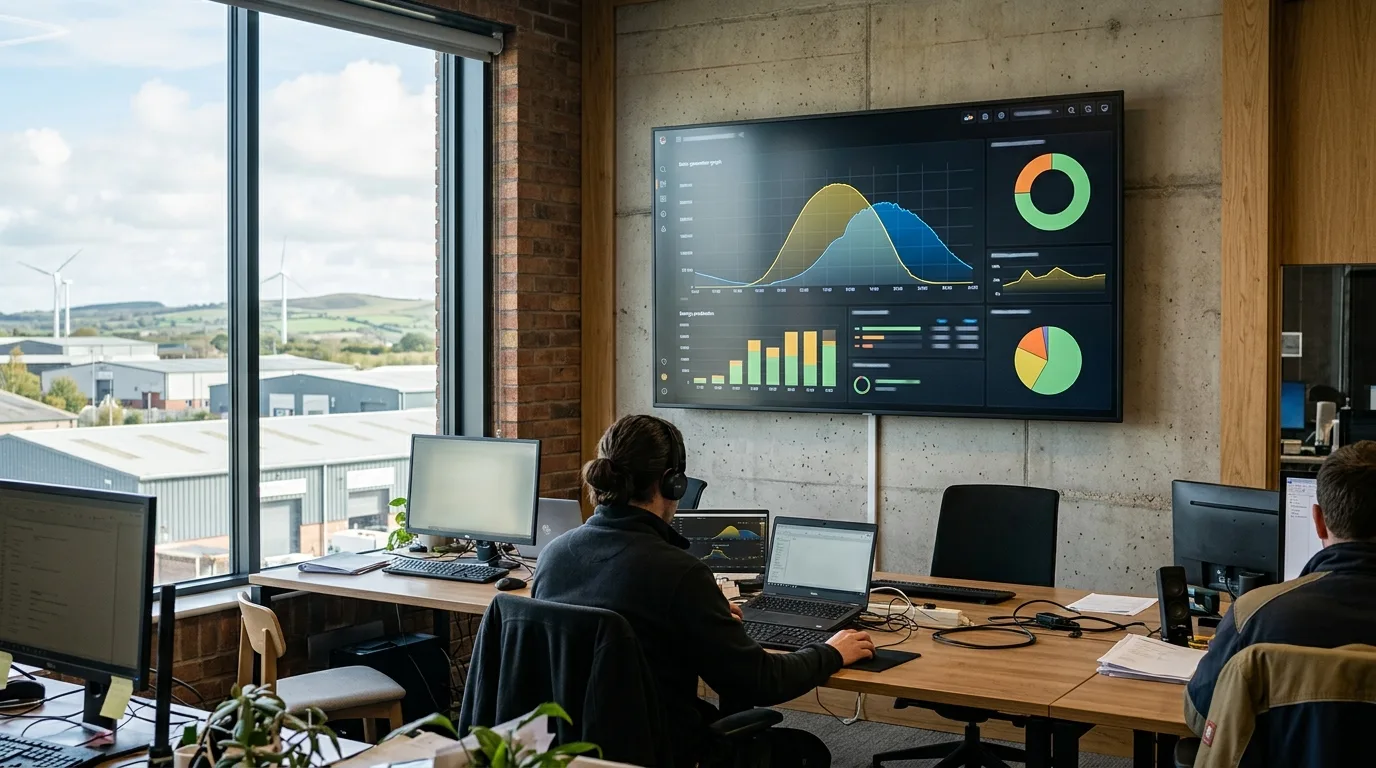
Commercial solar PV monitoring is the difference between an asset that quietly underperforms for 15 years and one that delivers its modelled yield year after year. In 2026, every Irish commercial PV system above 50 kWp should have proper monitoring with string-level granularity, alarm escalation, and integration with the building management system (BMS). This guide compares the major platforms, explains what to look for, and outlines the reports your finance and ESG teams will ask for.
Why commercial monitoring matters
A 200 kWp Irish commercial system generates approximately 180,000 kWh per year - worth €45,000-€55,000 in displaced imports and exports. A 10% underperformance, undetected, costs €4,500-€5,500 per year. Over 25 years that is €110,000-€140,000. Monitoring catches:
- String failures (often 5-15% loss per affected string)
- Inverter derating from thermal issues
- Soiling and shading changes
- Connector and fuse failures
- DC arc faults (safety critical)
- Grid-induced curtailment
- Configuration errors after maintenance
For a marginal cost of €500-€2,000 over basic monitoring, commercial-grade platforms typically pay back in the first detected fault.
The main platforms in Ireland
SolarEdge ONE
Bundled with all SolarEdge inverters. Module-level monitoring is included as standard when optimisers are used. Features in 2026:
- Module, string and site-level dashboards
- AI-driven anomaly detection
- Battery and EV charger integration
- Export limiting control
- BMS integration via Modbus TCP/RTU
- API access for ESG reporting
Strengths: depth of data, intuitive UI, included with hardware. Weaknesses: only works with SolarEdge inverters. Cannot consolidate other brands.
Huawei FusionSolar
Bundled with Huawei SUN2000 inverters and required for warranty registration. Features in 2026:
- String-level monitoring (with Smart Logger and current sensors)
- Smart I-V curve diagnosis for PID and degradation
- Active power, reactive power and export-limit control
- Modbus integration
- Multi-site portfolio dashboards
- API access
Strengths: mature monitoring, good mobile app, free with hardware. Weaknesses: Huawei-only; some Irish public-sector clients prefer non-Chinese platforms.
SMA Sunny Portal / ennexOS
Bundled with SMA inverters. Data Manager M required for string-level visibility. Features in 2026:
- Inverter and string monitoring
- Grid services control
- Power quality measurement
- Modbus and OPC UA integration
- API access
- Portfolio rollup
Strengths: engineering depth, long-term reliability, bankable platform. Weaknesses: UI feels dated; requires Data Manager for full features.
Sungrow iSolarCloud
Bundled with Sungrow SG110CX and SG-series inverters. Mature commercial monitoring with growing Irish footprint. Features include string-level data, AI fault detection, export control, BMS integration, and free 25-year cloud subscription.
Third-party multi-brand platforms
When a portfolio has multiple inverter brands or you want vendor-independent monitoring, third-party platforms are the answer. In Irish commercial work in 2026:
- Solar-Log - longest-established, supports 100+ inverter brands
- Meteocontrol VCOM - common on PPA-backed and institutional projects
- GreenPowerMonitor (DEIF) - utility-grade, used on large ground-mount
- AlsoEnergy PowerTrack - North-American origin, growing EU presence
Third-party platforms typically cost €500-€2,000 supply plus €200-€600/year subscription per site. For PPA projects where the off-taker needs independent verification, this is non-negotiable.
What to monitor
Minimum dataset for any commercial Irish solar project:
- DC string currents and voltages (per MPPT)
- Inverter AC output power, voltage and frequency
- Site export and import (via main incomer CT clamps or smart meter)
- Inverter temperatures
- Cumulative energy yield (kWh, lifetime)
- Alarm log with severity classification
Premium additions worth specifying:
- Module-level production (SolarEdge only without aftermarket retrofit)
- Weather station (irradiance, ambient temp, module temp) for performance ratio calculation
- DC arc fault detection logging
- Reactive power and grid event log
BMS integration
For sites with a building management system (Schneider EcoStruxure, Siemens Desigo, Honeywell Niagara, Trend, Distech), the solar monitoring should feed live data to the BMS. Standard integration paths:
- Modbus TCP over the building LAN (most common)
- Modbus RTU over RS485 (legacy BMS)
- BACnet/IP with a protocol converter
- OPC UA (newest, used on industrial sites)
Insist on Modbus TCP at minimum - it works with virtually every modern BMS and is free to configure. Lock down the network segment for security.
ESG and sustainability reporting
Larger Irish businesses are now subject to CSRD reporting obligations from 2025-2027 depending on size. Solar generation appears in Scope 2 (purchased electricity) and renewable energy claims. Your monitoring must produce:
- Monthly and annual kWh generation, broken down by self-consumed and exported
- CO2 displacement calculation (using current SEAI emission factor, ~0.31 kg CO2/kWh in 2026)
- Performance ratio against modelled yield
- Renewable Energy Certificate (REC) eligibility data if applicable
- Audit trail for assurance
All major platforms can produce these reports either natively or via API export. For CSRD-relevant clients, document the monitoring methodology in your sustainability policy.
Alarm and escalation
The most undervalued monitoring feature is alarm escalation. Configure:
- Critical alarms (inverter fault, arc fault, communication loss > 4 hours): SMS + email to O&M, with escalation if not acknowledged
- Warning alarms (string underperformance, derating): daily digest to O&M
- Info events (firmware updates, configuration changes): weekly summary
Without alarm escalation, monitoring becomes "we noticed three months later". Insist that your O&M agreement includes a defined response time tied to alarm severity.
Cybersecurity
Commercial solar monitoring connects to your corporate or operational network. Best practice in 2026:
- VLAN-isolate solar monitoring from corporate IT
- No direct internet exposure of inverters
- Default passwords changed at commissioning and documented
- Firmware updates managed under change-control
- Modbus integration is read-only unless export control is required
- Reference NIS2 obligations for in-scope operators
For larger Irish institutional sites, IT/OT cybersecurity should be a written requirement in the EPC specification.
What to specify in the EPC contract
At minimum:
- Inverter brand monitoring (SolarEdge ONE, FusionSolar, etc.) with 5-year subscription paid
- String-level granularity (not just inverter total)
- Modbus TCP BMS integration tested at commissioning
- CSV/PDF report generation, monthly and annual
- API access included
- Alarm escalation to O&M with defined response SLA
- Cybersecurity acceptance test
Bottom line
Commercial solar monitoring in Ireland in 2026 is mature, affordable and essential. Inverter-bundled platforms (SolarEdge ONE, Huawei FusionSolar, SMA Sunny Portal) cover most needs. Specify string-level monitoring, integrate with the BMS, and put alarm escalation into the O&M agreement. The marginal cost is trivial; the cost of unmonitored underperformance over a 25-year asset life is substantial.
Get 3 free commercial solar quotes — free and no obligation.
Frequently asked questions
Do I need a separate monitoring platform if I already have inverter monitoring?
Usually no. SolarEdge ONE, Huawei FusionSolar and SMA Sunny Portal are mature and free with their inverters. You only need third-party monitoring if you have multi-brand portfolios or PPA off-takers requiring independent verification.
What is the minimum monitoring spec for a commercial Irish solar project?
String-level production data, inverter AC output, site export/import, alarm log with severity classification, and Modbus TCP integration with the BMS if one exists. All deliverable with stock inverter monitoring on every major brand.
How is solar generation included in CSRD reporting?
Solar appears in Scope 2 renewable electricity claims. Monitoring must produce monthly/annual kWh with self-consumed vs exported breakdown, CO2 displacement (using current SEAI emission factor), and an audit trail for assurance providers.
Should solar monitoring be on the same network as corporate IT?
No. Best practice in 2026 is VLAN-isolated OT segment, no direct internet exposure, default passwords changed at commissioning, and firmware updates under formal change-control. Reference NIS2 obligations for in-scope operators.
How quickly should monitoring catch a failed string?
Properly configured monitoring detects an underperforming or failed string within 24-48 hours of occurrence. Alarm escalation to the O&M contractor should produce a site visit within the SLA defined in the O&M agreement, typically 3-5 working days.
Sources & further reading
- SolarEdge ONE Monitoring — SolarEdge Technologies
- Huawei FusionSolar Smart PV Management — Huawei FusionSolar
- Corporate Sustainability Reporting Directive (CSRD) — European Commission