Seveso Sites and Commercial Solar in Ireland 2026: COMAH Compliance Guide
Commercial solar on Irish Seveso-regulated sites needs careful design, MAPP integration and HSA engagement. Here is what to expect in 2026 and how to deliver a compliant install.
By Smart Solar Editorial · Updated 15 May 2026 · 8 min read
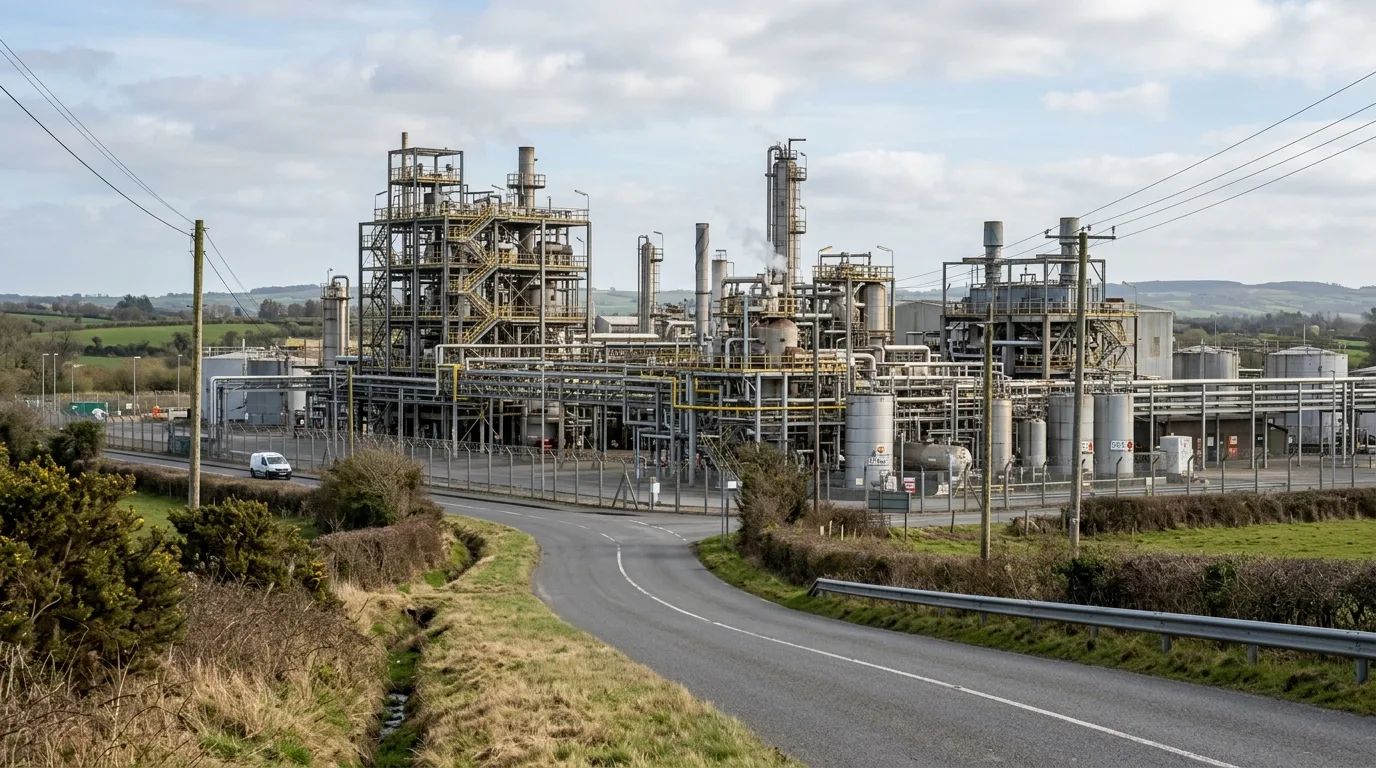
The Seveso III Directive, implemented in Ireland through the Chemicals Act and the Control of Major Accident Hazards Involving Dangerous Substances (COMAH) Regulations 2015, governs sites where dangerous substances are present above defined thresholds. Adding solar PV to a Seveso-regulated site is technically and procedurally more complex than a standard commercial install. This guide covers what is required in 2026, the design constraints, the HSA engagement process and the typical timelines.
When the Seveso regime applies
The COMAH Regulations 2015 apply to Irish sites holding dangerous substances above defined thresholds:
- Lower-tier: notification and safety management requirements
- Upper-tier: full safety report, emergency plans, public information, regular HSA inspection
Typical Irish industries with Seveso-regulated facilities include pharmaceutical manufacturing (multiple Cork harbour sites, North Dublin, Galway), petrochemical storage (Whitegate, Bantry), bulk fuel and LPG storage (Dublin Port, Foynes, Whiddy Island), explosives manufacture, certain food and dairy ammonia refrigeration sites, and certain large data centres with significant battery or fuel inventories.
If your site is COMAH-regulated, adding solar PV requires integration with the existing safety management system - it cannot be bolted on as a standard commercial install.
Why solar PV is a Seveso consideration
Solar PV introduces several new hazards onto a Seveso site:
- DC electrical hazards. PV strings remain energised in daylight and cannot be fully isolated except at module level (or with SafeDC platforms like SolarEdge).
- Fire load. Modules, cabling and inverters add combustible material in a defined area.
- Roof access constraints. Maintenance requires roof access that may pass over or near hazardous areas.
- Hot-work and ignition risk. Installation involves drilling, fixing and electrical termination near process areas.
- EMF and EMC interference. Inverters can interfere with safety-critical instrumentation if not properly designed.
- Hazardous area zoning. Equipment in Zone 1 or Zone 2 areas requires ATEX/IECEx certification - standard PV equipment is not certified.
The Major Accident Prevention Policy (MAPP) and the safety report must be updated to address these new hazards.
The HSA engagement process
For Seveso sites, the Health and Safety Authority (HSA) is the competent authority. The typical 2026 process for adding solar PV:
- Internal hazard assessment. Site safety team conducts a preliminary review of the proposed PV scheme against existing hazards.
- HAZOP/HAZID study. Formal hazard study covering installation, operation and maintenance phases.
- MAPP update. Document how the solar PV is integrated into the major accident prevention policy.
- Safety report addendum (upper-tier sites). Submitted to HSA for review.
- HSA pre-installation review. Typically 8-16 weeks for upper-tier sites.
- Approval to proceed. Letter or formal communication confirming HSA has no objection.
- Construction with enhanced controls. Permits to work, hot-work permits, isolation procedures.
- Post-installation safety case update. Final documentation of as-built design.
Total elapsed time from initial concept to construction approval: typically 6-15 months for an upper-tier site, 3-8 months for a lower-tier site.
Design constraints specific to Seveso sites
- Avoid placement above hazardous storage. Solar arrays should not be located directly above LPG tanks, chemical storage, or process plant where a major accident could compromise the PV or vice versa.
- Maintain firefighting access. PV layout must preserve clear access routes for emergency vehicles and ladder placement.
- Roof loading. Many Seveso sites have older roofs with significant existing process pipework or equipment - structural assessment is critical.
- Cable routing. Avoid running PV DC cables through or near hazardous areas. Plan all routes through safe zones with appropriate segregation.
- Inverter location. Inverters must be installed in safe areas, not in hazardous zones unless ATEX-certified (rare and expensive).
- Emergency isolation. Provide clear, accessible emergency isolation points for the entire PV system, integrated with the site emergency procedures.
- Earthing and bonding. Coordinate with existing site lightning protection and earthing systems.
- Anti-glare considerations. Particularly important on sites with control rooms or critical visual monitoring.
SafeDC and module-level shutdown
For Seveso sites the SolarEdge SafeDC technology (or equivalent module-level shutdown) is strongly recommended. When the inverter is de-energised, optimisers reduce string voltage to 1V per module - eliminating high-voltage DC on the roof during emergency response or maintenance. This is now standard practice on Irish pharmaceutical sites adopting commercial solar.
Several Irish industrial insurers have started requiring module-level shutdown for COMAH sites as a condition of cover.
Insurance and underwriting
Adding solar PV to a Seveso site triggers insurance review. Underwriters will typically require:
- HSA-approved design
- SafeDC or equivalent module-level shutdown
- Fire detection integrated with site fire system
- Approved EPC with Seveso project track record
- Detailed fire load and risk assessment
- Annual third-party inspection
Premium impacts vary but are typically modest if the design is good. Poorly designed installs can see premium uplifts of 10-25% or coverage exclusions.
Fire protection
For commercial PV on Seveso sites in Ireland, expect to specify:
- Module-level shutdown (SafeDC or equivalent)
- DC arc fault detection on every inverter
- Linear heat detection cable along DC string trays where they cross fire compartments
- Integration of inverter fault alarms with the site fire control system
- Clear marking of PV emergency isolation points on site fire plans
- Pre-installation fire department visit and briefing
Working with the right EPC
Seveso projects are not routine commercial solar. The EPC must have:
- Demonstrated track record on at least 3-5 similar regulated sites
- Permit-to-work experience and trained operatives
- HAZOP/HAZID participation capability
- Experience with HSA-facing documentation
- ATEX awareness for any equipment near hazardous zones
- Mature change-management procedures
Few Irish EPCs are fully comfortable in this space. Activ8, Enerpower, Mercury Engineering, John Sisk and a handful of specialist contractors have meaningful Seveso experience. Ask for specific references at scale before contracting.
Costs
Seveso compliance typically adds 15-35% to the standard commercial solar capex through:
- Extended design and HAZOP costs
- SafeDC or equivalent hardware
- Enhanced fire detection
- Lower productivity from permit-controlled installation work
- Additional documentation and certification
For a 500 kWp Seveso project that means roughly €60,000-€200,000 above a standard commercial install. Still typically deliverable within a 7-12 year payback at current Irish industrial electricity prices.
Bottom line
Commercial solar is achievable on Irish Seveso sites in 2026 but requires careful design, mature HSA engagement, SafeDC technology, and an EPC with regulated-industry experience. Plan for 6-15 months elapsed timeline and a 15-35% capex uplift over a standard commercial install. The economic case still works for most regulated sites - but it is not a DIY procurement.
Get 3 free commercial solar quotes — free and no obligation.
Frequently asked questions
Can I install commercial solar on a Seveso-regulated site in Ireland?
Yes, but the design must be integrated with the site safety management system and approved through the HSA. Expect a 6-15 month elapsed timeline and a 15-35% capex uplift over a standard commercial install.
Does the HSA need to approve my solar PV design?
For upper-tier COMAH sites, the safety report addendum is submitted to HSA for review and approval. Lower-tier sites notify and document changes through the MAPP. Either way, formal HSA engagement is essential.
Is SolarEdge SafeDC required on Seveso sites?
Not legally required, but strongly recommended and increasingly required by industrial insurers. Module-level shutdown eliminates high-voltage DC on the roof during emergency response, which is a key Seveso safety advantage.
Which Irish EPCs can deliver Seveso-compliant solar projects?
Activ8 Solar Energies, Enerpower, Mercury Engineering, John Sisk and a small number of specialist contractors have meaningful track records on Irish pharmaceutical, petrochemical and regulated-industry solar projects.
What does Seveso compliance add to the cost of commercial solar?
Typically 15-35% capex uplift over a standard install, driven by extended design work, SafeDC hardware, enhanced fire detection, permit-controlled installation productivity, and additional documentation.
Sources & further reading
- Control of Major Accident Hazards (COMAH) Regulations — Health and Safety Authority
- Seveso III Directive — European Commission
- Solar PV on Industrial Sites Guidance — Health and Safety Authority