Commercial Solar Planning Permission Ireland 2026: Above 50 kW Guide
Irish planning rules for commercial solar were liberalised in 2022 and refined again in 2024. Here is what is exempted development in 2026, what needs planning, and how to avoid refusals.
By Smart Solar Editorial · Updated 15 May 2026 · 9 min read
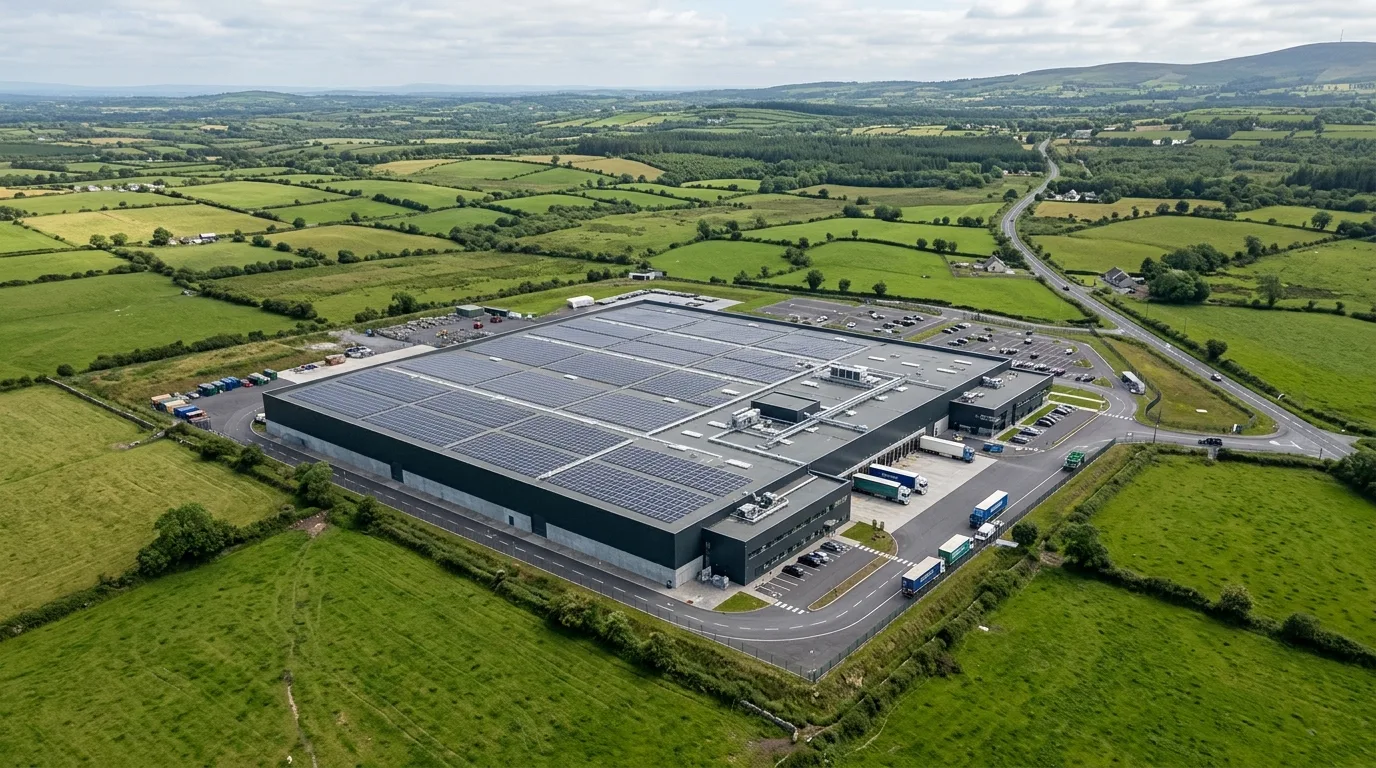
Planning permission for commercial solar PV in Ireland was substantially liberalised in October 2022 under the Planning and Development Act exemptions for solar installations, and refined again in 2024 to remove the 60% roof-area cap and lift the height restrictions. In 2026, most rooftop commercial solar installations of any size are exempted development. Ground-mount projects above defined thresholds still need full planning. This guide explains the rules in plain language and outlines how to avoid the most common planning issues.
What changed in 2022 and 2024
Pre-2022 commercial solar planning rules limited rooftop installations to small areas and often required planning even for modest installs. The 2022 reforms removed area caps for industrial and agricultural buildings, lifted exemptions to most commercial buildings (subject to conditions), and explicitly enabled rooftop solar without planning in most cases.
The 2024 amendment under SI 226 of 2024 (and subsequent regulations) further:
- Removed the 60% roof-area cap that had remained on some building categories
- Extended exemption to most commercial and institutional buildings
- Clarified rules for solar on protected structures
- Maintained heritage and visual-amenity protections in defined zones
Rooftop solar: when is planning needed in 2026?
For most commercial rooftop installations in 2026, planning permission is NOT required when:
- The building is industrial, agricultural, commercial, light-industrial or institutional (not a protected structure)
- The PV is roof-mounted (not standing up from the roof structure)
- The panels do not extend more than the roof line (for pitched) or the agreed flat-roof projection rules
- The installation does not face onto a public road from a protected building
- The building is not in an Architectural Conservation Area (ACA) or Special Amenity Area (SAA) without consent
Planning IS required when:
- The building is a protected structure (listed under the Planning and Development Acts)
- The installation is in an ACA, World Heritage Site or designated landscape
- The panels are mounted on a structure that elevates them significantly above roof level
- The installation requires significant structural alterations to the roof or building envelope
For 95%+ of Irish commercial rooftop solar projects in 2026, planning is not required. Confirm with your local authority planning office if in any doubt - most councils provide a 5-10 working day informal opinion.
Ground-mount solar: planning thresholds
Ground-mount commercial solar follows different rules:
- Up to 50 kW (approximately 350 m² array area): generally exempted development on a holding, subject to setbacks from boundaries and watercourses
- 50 kW to 1 MW: typically requires planning permission from the local authority
- Above 1 MW: generally requires planning, and for larger arrays may need Environmental Impact Assessment (EIA) screening
- Above 5 MW or in sensitive areas: EIA almost always required
For agricultural ground-mount under 50 kW, the exemption typically covers ancillary works such as fencing and access tracks. Above 50 kW, expect a full planning application with site notice, public consultation, and 8-12 week decision timeline.
The planning application process for ground-mount
For a 200-500 kW ground-mount commercial solar project in 2026:
- Pre-planning consultation. Engage with the local authority planning officer informally. Most councils offer this for free.
- Site notice and newspaper notice. Erect a site notice on the proposed site and publish in a local newspaper.
- Application lodged. Includes site location plan, layout drawings, ecological assessment if required, landscape and visual impact assessment, glint and glare study, and PVGIS yield modelling for context.
- Public consultation period. 5 weeks for submissions/observations.
- Council decision. 8 weeks from validation, often extended.
- Possible appeal to An Bord Pleanala. Adds 6-9 months.
Total elapsed time from pre-planning to commencement: typically 5-12 months for a clean application, 12-24 months if appealed.
Common reasons for refusal
Irish planners refuse commercial ground-mount solar most commonly for:
- Visual impact on landscape. Particularly in scenic or rural settings. Mitigation: hedgerow screening, low-tilt arrays, ground-following layout.
- Loss of agricultural land. Particularly Class A/B soils. Mitigation: agrivoltaics design with continued grazing.
- Glint and glare. Particularly near roads, airports or residential. Mitigation: anti-reflective module coatings, glint/glare study documenting low risk.
- Biodiversity impact. Particularly on grassland or hedgerow habitat. Mitigation: ecological assessment, biodiversity management plan, retention of hedgerows.
- Traffic and access during construction. Mitigation: Construction Traffic Management Plan.
Heritage and protected structures
If your commercial building is a Protected Structure (listed under Planning and Development Acts) or in an Architectural Conservation Area (ACA), planning permission is required for any solar installation. The application is typically handled as a "minor works" application but is subject to assessment by the Local Authority's Conservation Officer.
Typical accommodations:
- Panels mounted on rear or low-visibility slopes only
- Concealed cabling and inverters
- Removable mounting systems
- Matching colour of mounting hardware to roof finish
Many Irish protected structures successfully install solar but the design process takes longer (3-6 months pre-installation).
Architectural Conservation Areas (ACAs)
In an ACA, solar installations are not automatically exempted. The local authority planning section will assess the impact on the character of the area. In most cases solar can be accommodated with sensitive design but expect a planning process of 8-12 weeks for a Section 5 declaration or full planning application.
Solar and the climate planning context
Local authorities are increasingly receptive to commercial solar applications since the introduction of the Climate Action and Low Carbon Development (Amendment) Act 2021 and the County Development Plans incorporating climate objectives. Mention alignment with the Climate Action Plan and the County Development Plan renewable energy objectives in your planning application narrative.
Pre-application engagement
For any ground-mount project above 100 kW, formal pre-application consultation with the planning authority (under Section 247 of the Planning and Development Act) is strongly recommended. This identifies issues early and is free. Bring:
- Outline site layout
- Indicative kWp and AC capacity
- Photomontages from key vantage points
- Glint and glare initial assessment
- Ecology desk study
Most Irish planning authorities will issue informal commentary within 4-6 weeks.
Bottom line
Commercial rooftop solar in Ireland in 2026 is exempted development for the vast majority of buildings - no planning permission required. Ground-mount above 50 kW needs planning, takes 5-12 months and benefits enormously from pre-application engagement. Heritage buildings need sensitive design but can usually accommodate solar with planning consent. Get the EPC and planning consultant aligned on the planning strategy before you commit to design work.
Get 3 free commercial solar quotes — free and no obligation.
Frequently asked questions
Do I need planning permission for commercial rooftop solar in Ireland in 2026?
In most cases no. Since the 2022 and 2024 reforms, rooftop solar on industrial, agricultural, commercial and most institutional buildings is exempted development. Exceptions: protected structures, Architectural Conservation Areas, and certain heritage zones.
What is the planning threshold for ground-mount commercial solar?
Up to 50 kW (approximately 350 m²) is generally exempted on a holding. Above 50 kW requires planning permission from the local authority. Above 1 MW may require Environmental Impact Assessment screening.
How long does planning take for a 500 kW ground-mount solar farm?
Typically 5-12 months from pre-planning to decision for a clean application. An appeal to An Bord Pleanala adds 6-9 months. Pre-application consultation is strongly recommended to reduce risk of refusal.
Can I install solar on a protected structure?
Yes, but planning permission is required and the design must be sensitive to the building's character. Typical accommodations include rear-slope mounting, concealed cabling, and matching hardware colour. Engage the Conservation Officer early.
What are the most common reasons for ground-mount solar planning refusal?
Visual impact on landscape, loss of high-quality agricultural land, glint and glare risk near roads or homes, biodiversity impact on grassland or hedgerows, and traffic management during construction. All are addressable with good design and supporting assessments.
Sources & further reading
- Planning and Development (Exempted Development) Regulations — Department of Housing, Local Government and Heritage
- Solar Panels Planning Exemptions — Department of Housing
- Climate Action and Low Carbon Development Act — Irish Statute Book