MSS Commercial Export Tariff 2026: What Irish Businesses Get Paid for Solar Exports
Irish businesses exporting solar to the grid in 2026 typically receive 13-15c/kWh under the MSS. Here is how the non-domestic export tariff actually works, who pays it, and how to model it in your business case.
By Smart Solar Editorial · Updated 15 May 2026 · 9 min read
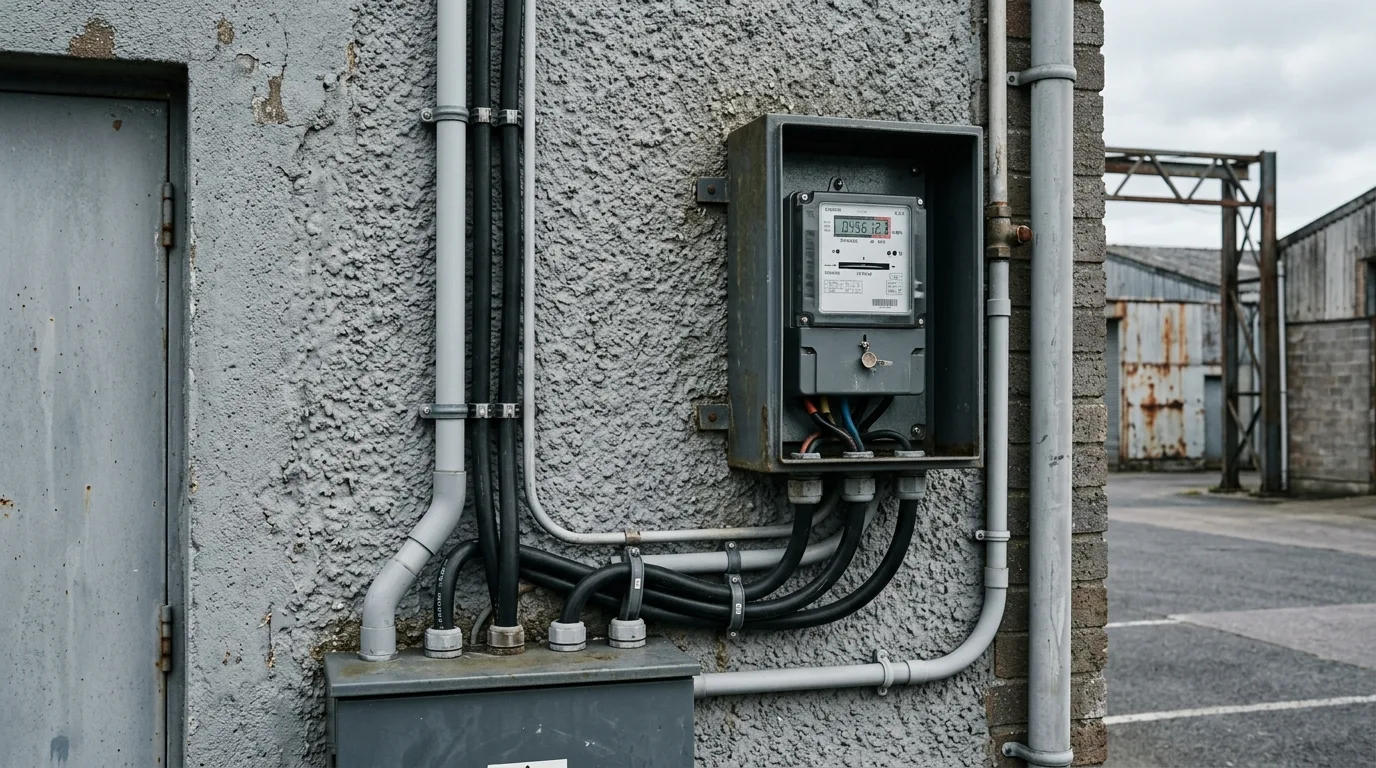
The Microgeneration Support Scheme (MSS) is the framework that obliges Irish electricity suppliers to pay businesses and households for surplus solar exported to the grid. For commercial customers in 2026, the non-domestic export tariff sits in the 13-15c/kWh band and is a meaningful, but secondary, contributor to the business case for solar PV. This guide explains how it works, what the rates actually are, how to compare suppliers, and the common mistakes that erode export revenue.
What the MSS is and is not
MSS is a regulatory support scheme, not a single fixed tariff. It places an obligation on licensed electricity suppliers (Electric Ireland, Bord Gais Energy, SSE Airtricity, Energia, Pinergy, Flogas and others) to offer a Clean Export Guarantee (CEG) tariff to microgenerators. Each supplier sets its own rate, subject to CRU oversight.
Crucially, MSS:
- Covers exports up to 50 kWp without supplier-approval friction.
- Covers exports above 50 kWp on a Clean Export Premium basis where applicable.
- Does not cover self-consumption - those kWh are valued at your avoided import price (typically 25-35c/kWh for businesses in 2026), which is far more valuable.
- Pays for exported kWh only, measured at your import-export meter installed by ESB Networks.
2026 non-domestic export rates
Across the main commercial suppliers in 2026 the non-domestic CEG rate has converged into a 13-15c/kWh range, with occasional promotional offers above that. Indicative published rates seen during 2026:
- Electric Ireland: ~14c/kWh non-domestic CEG
- Bord Gais Energy: ~13.5c/kWh
- SSE Airtricity: ~14.5c/kWh
- Energia: ~14c/kWh with sector-specific top-ups
- Pinergy: ~15c/kWh on certain plans
These rates exclude VAT. For a VAT-registered business the export payment is treated as taxable income and the supplier issues a self-billing invoice. Always check the current published rate on each supplier website before signing - they move with wholesale prices.
How the export meter works
You cannot get paid for export until ESB Networks has:
- Approved your NC7 (or NC6) connection application.
- Installed or reprogrammed your meter to measure import and export separately.
- Notified the supplier of your microgenerator status via the MPRN registry.
Until that loop is closed, every exported kWh is unpaid - the meter spins forward on import only and your exports are effectively a gift to the grid. Many commissioned commercial systems run for 2-4 months before the export meter is live. Plan for this gap in your cash-flow model.
Self-consumption vs export economics
A simple rule of thumb for 2026 Irish commercial solar:
- Self-consumed kWh is worth your blended day-rate import price, typically 25-35c/kWh.
- Exported kWh is worth 13-15c/kWh under MSS.
So every kWh you can shift from export to self-consumption roughly doubles its value. This is why correctly sizing the system to daytime load - rather than to roof area or grant cap - is the single most important economic lever. A 200 kWp system with 85% self-consumption generates substantially more annual savings than a 300 kWp system with 55% self-consumption, even though gross generation is lower.
Modelling export revenue in a business case
For a typical Irish commercial PV installation at PVGIS yields of 900-950 kWh/kWp:
- A 100 kWp system generates ~92,500 kWh/year.
- If self-consumption is 70%, export is 30% = 27,750 kWh.
- Export revenue at 14c/kWh = ~€3,885/year.
- Self-consumption savings at 30c/kWh = ~€19,425/year.
- Combined first-year value: ~€23,310.
Note how the export portion is only ~17% of total annual value despite being 30% of generation. This is structural and worth communicating clearly to finance teams - export tariffs are a useful sweetener, not the main event.
The Clean Export Premium (CEP) for larger systems
For systems above the microgen threshold (typically those exporting more than 50 kWp), the Clean Export Premium kicks in. This is a top-up administered through SEMO settlement that smooths the difference between wholesale spot prices and a reference floor price. For most SMEs this is invisible - the supplier handles it - but for systems above 200 kWp and PPA-backed projects, the CEP mechanism is what underwrites the merchant tail of any export revenue forecast.
Choosing a supplier for solar export
When tendering your supply contract post-solar:
- Match supplier with installation. Many suppliers require you to also be an import customer to receive the export tariff. Bundle the supply review with the solar project.
- Check the cap. Some non-domestic CEG tariffs cap exports per year (often at 80% of historical import). Above that, the export rate can drop to zero or wholesale-linked.
- Read the term. Most CEG tariffs are 12-month rolling. Some are fixed for 24-36 months. Lock in if rates are good.
- Compare the import side. A 1c/kWh better export rate matters far less than a 3c/kWh better import rate. Total cost of energy is what matters.
- Beware exit fees. Some bundled solar export deals have early-termination charges.
Tax treatment
For non-domestic generators, export income is taxable as trading income. Suppliers issue self-billing invoices monthly or quarterly. Account for it the same way as any other revenue stream. VAT-registered businesses charge VAT on export at the standard rate; if you are not VAT-registered the tariff is gross.
There is no equivalent of the personal €400 tax exemption that applies to households - businesses pay full corporation tax (12.5%) or income tax on export earnings.
Pitfalls that erode export revenue
- No NC7 sign-off before commissioning - exports go unmeasured.
- Old static meter still installed - call ESB Networks to upgrade.
- Inverter clamping wrongly configured to zero-export - check inverter settings post-install.
- Supplier mismatch - you switched suppliers but did not notify ESB Networks; export tariff drops to the regulated default.
- Annual export cap breached without renegotiation.
Bottom line
The MSS non-domestic export tariff is a useful but secondary line in the Irish commercial solar business case. At 13-15c/kWh in 2026 it puts a floor under summer surplus and weekend exports. But every euro of value comes from displacing imported electricity at 25-35c/kWh, so sizing for self-consumption, not export, is what makes commercial solar work. Treat export tariff as gravy, not the main course - and check the meter is actually paying you within 90 days of commissioning.
Get 3 free commercial solar quotes — free and no obligation.
Frequently asked questions
What is the MSS export tariff for businesses in 2026?
Most non-domestic Clean Export Guarantee tariffs sit between 13c and 15c per kWh in 2026, varying by supplier. Rates are reviewed periodically and exclude VAT.
Is the export tariff better than self-consumption?
No. Self-consumed kWh displace imports priced at 25-35c/kWh for most businesses, roughly double the export rate. Always size systems for self-consumption first.
Do I have to be an import customer to receive the export tariff?
In practice yes. Most suppliers require you to hold the import supply contract to qualify for their CEG tariff. Bundle the contracts when switching.
Is the export payment taxable?
Yes. For non-domestic generators it is treated as trading income and taxed at the normal corporate or personal rate. There is no equivalent of the household €400 tax exemption.
How long until I start receiving export payments after commissioning?
Typically 2-4 months. You need NC7 sign-off, an import-export meter installed, and the supplier registered as your microgen-paying entity before the first invoice is issued.
Sources & further reading
- Microgeneration Support Scheme — Department of the Environment, Climate and Communications
- Clean Export Guarantee Tariff — Commission for Regulation of Utilities
- Selling electricity back to the grid — SEAI