Heat Pump vs Gas Boiler Ireland: Costs, Efficiency and Which to Choose in 2026
Ireland's gas network serves hundreds of thousands of homes, but the tide is turning as heat pumps become cheaper to run and gas carbon taxes keep rising. This guide gives you the full financial and practical comparison for 2026.
By Smart Solar Editorial · Updated 15 May 2026 · 9 min read
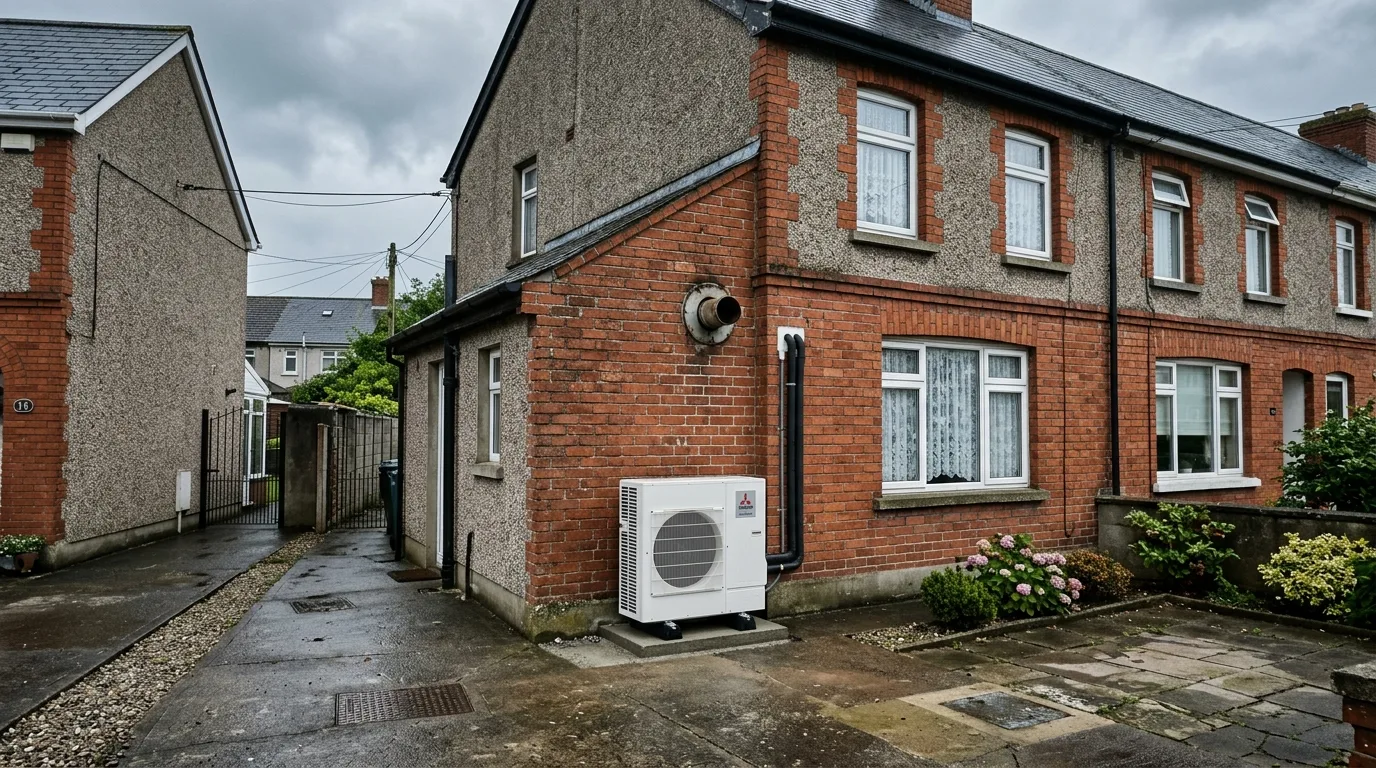
Ireland's relationship with gas heating is changing rapidly. The government's Climate Action Plan requires a phase-down of fossil fuel boilers, and SEAI grants now provide substantial support for homeowners switching to heat pumps. But for the hundreds of thousands of Irish homes currently on the gas network, the question is practical: does a heat pump actually beat a gas boiler on cost and comfort in 2026?
This guide gives you the honest answer, with real numbers for Irish households.
The Fundamental Difference
A gas boiler burns natural gas (or LPG) to generate heat. It converts roughly 85–92% of the fuel's energy content into usable heat. A modern condensing gas boiler is therefore about 90% efficient — far better than the old non-condensing models.
A heat pump does not burn fuel. It moves heat from the outdoor air into your home using a refrigeration cycle, powered by electricity. For every unit of electricity consumed, a well-designed system delivers 3–4 units of heat. This makes a heat pump 300–400% efficient — seemingly impossible, but thermodynamically valid because it's harvesting ambient heat rather than generating it from scratch.
Running Cost Comparison: 2026 Irish Prices
For a four-bedroom semi-detached Irish home with:
- Annual space heating demand: 12,000 kWh
- Annual hot water demand: 3,500 kWh of heat
- Total heat demand: 15,500 kWh/year
Natural Gas Boiler (90% efficiency):
- Gas required: 15,500 ÷ 0.90 = 17,222 kWh of gas
- Gas price in 2026: ~9–10 c/kWh (unit rate after carbon tax, standing charge separately)
- Estimated annual fuel cost: €1,550–€1,722
- Standing charge: ~€250/year
- Total estimated cost: €1,800–€1,972/year
Air-to-Water Heat Pump (SCOP 3.5, smart night-rate tariff):
- Electricity required: 15,500 ÷ 3.5 = 4,429 kWh
- Blended electricity rate (70% night at 13c, 30% day at 26c): ~16.9 c/kWh
- Estimated annual electricity cost: €748/year
Annual saving with heat pump: approximately €1,050–€1,224/year
These figures will vary depending on your specific gas tariff, electricity tariff, home size, and insulation level. But the directional story is clear: in 2026, a well-installed heat pump on a smart tariff is significantly cheaper to run than a gas boiler in an Irish home.
Carbon Tax and Future Gas Price Risk
Ireland's carbon tax on fossil fuels is a key driver of the economics. Under the Finance Acts, the carbon tax increases every year on a scheduled pathway:
- 2024: €56/tonne CO₂
- 2025: €63.50/tonne CO₂
- 2026: €71/tonne CO₂
- ...rising towards €100/tonne CO₂ by 2030
Natural gas produces approximately 204 g CO₂ per kWh. At €71/tonne, the carbon tax adds roughly 1.45 c/kWh to gas costs in 2026. By 2030, this will add approximately 2.04 c/kWh. For a home using 17,000 kWh of gas annually, that's an additional €347/year in carbon tax by 2030 compared to today.
A heat pump running on the electricity grid is already significantly cleaner than gas. As Ireland's electricity grid continues to decarbonise — SEAI targets 80% renewable electricity by 2030 — the carbon footprint of heat pump heating falls further. Grid electricity in Ireland currently produces approximately 200–250 g CO₂/kWh (falling), while natural gas produces 204 g CO₂/kWh at the burner alone (not counting extraction and distribution losses).
Upfront Cost Comparison
New gas boiler replacement:
- Modern condensing gas combi-boiler: €2,500–€4,500 installed
- No SEAI grant available for gas boiler replacement
- Lifespan: 12–15 years
Air-to-water heat pump (retrofit):
- Typical installed cost: €15,000–€22,000
- SEAI heat pump grant: €6,500
- SEAI technical assessment grant: €200
- Net cost after grants: €8,300–€15,500
- Lifespan: 15–20+ years
The higher upfront cost of a heat pump is the main barrier. However, with annual savings of €1,000–€1,200 and a net installation cost of €8,300–€15,500, the simple payback period is approximately 7–15 years — within the system's lifespan.
Financing options including green loans from credit unions (at rates from 4.5%) and SEAI's Home Energy Upgrade Loan (subsidised, from 3% APR) can spread the cost over 5–10 years, making the monthly cash flow positive from day one in many cases. See our guide on heat pump financing in Ireland for details.
Comfort and Control: How They Compare
Gas boiler advantages:
- Very fast heat-up time (boiler fires up immediately)
- High flow temperatures (70–80°C) easily heat large rooms with small radiators
- Familiar controls and reliability
- Comfortable on very cold days without any adaptation
Heat pump advantages:
- Consistent, gentle warmth — runs more continuously at lower temperatures for a constant comfortable background heat
- Smart scheduling via app (Daikin Onecta, Mitsubishi MELCloud, Samsung SmartThings)
- Automatic adaptation to outdoor temperature via weather compensation
- Can provide cooling in summer (on models with reversible cooling)
- No gas supply line needed — electric only (no Bord Gáis monthly standing charge)
- No carbon monoxide risk, no flue, no annual gas safety check required
Some Irish homeowners initially miss the instant blast of heat from a gas boiler and find the heat pump's slower, steadier warmth less satisfying. This is more of a perception issue than a reality — a properly designed and commissioned heat pump maintains a comfortable indoor temperature continuously. The key is correct system design: the heat pump should be sized and flow-temperature-set to keep the home at the target temperature without relying on rapid heat-up from cold.
Is Your Home Suitable for a Heat Pump?
Not every gas-heated Irish home is equally ready for a heat pump switch. Key suitability factors:
Ideal for heat pump:
- BER B2 or better (or willing to carry out insulation upgrades)
- Has or will install underfloor heating, OR radiators can be upgraded to larger low-temperature emitters
- Has or will install a hot water cylinder (gas combis typically don't have one)
- Has space for the outdoor unit (1.2–1.8 m clearance)
Needs assessment:
- BER C or D (will need insulation works as part of the project)
- Standard-size radiators (may need upsizing for efficient operation)
- Terraced or apartment home with limited outdoor space
Gas combi boiler homes often lack a hot water cylinder — this must be added as part of the heat pump installation, adding €800–€1,500 to the project cost but delivering significantly more efficient hot water heating.
The Verdict: When to Switch Now, When to Wait
Switch to a heat pump now if:
- Your boiler is due for replacement (don't spend €3,000+ on a new gas boiler if a heat pump makes sense)
- Your home is BER B3 or better, or you are willing to combine insulation works with the heat pump installation
- You have access to SEAI grant funding (€6,500) and potentially a green loan
- You are connected to a gas line but could disconnect (saving the €250+/year standing charge)
Consider waiting if:
- Your existing gas boiler is less than 5 years old and working well
- Your home needs significant structural insulation works before a heat pump would be efficient
- You are in the process of selling and cannot recover the investment
- Your home has very specific heating needs that require detailed technical assessment
For most Irish homeowners on gas whose boiler is more than 8–10 years old, 2026 is an excellent time to make the switch. Grant levels remain at their highest, installation costs have stabilised, and gas prices and carbon taxes are scheduled to keep rising.
Get 3 free heat pump quotes — free and no obligation.
Frequently asked questions
Is a heat pump cheaper to run than a gas boiler in Ireland?
Yes, in most cases. A heat pump on a smart night-rate tariff typically costs €700–€900/year to run a 4-bed Irish home, compared to €1,800–€2,000/year for natural gas. The exact saving depends on your tariff, SCOP, and home's heat demand.
Can a heat pump replace a gas combi boiler in Ireland?
Yes, but a gas combi boiler replacement requires adding a hot water cylinder as part of the project, since heat pumps use a stored hot water system rather than instantaneous hot water. This adds €800–€1,500 to the installation cost but is typically included in installer quotes.
Will gas boilers be banned in Ireland?
The Irish government's Climate Action Plan requires a phase-out of fossil fuel heating in new builds (new gas connections for domestic properties are already effectively ended) and a planned phase-down in existing homes. No specific ban date for existing gas boiler replacements has been legislated, but grants and carbon taxes are creating strong financial incentives to switch.
What SEAI grant can I get for switching from gas to a heat pump?
The SEAI heat pump grant in 2026 provides €6,500 towards the cost of an air-to-water heat pump, plus €200 for a technical assessment. Your home must have a BER of B2 or better, or a technical assessment confirming SCOP 2.5+ is achievable. Gas boiler replacements do not qualify for SEAI grants.
Do I need to upgrade my radiators when replacing a gas boiler with a heat pump?
Often yes, for best efficiency. Gas boilers typically run at 70–80°C, while heat pumps work best at 35–55°C. If your existing radiators are sized only for high-temperature operation, upgrading to larger low-temperature radiators allows the heat pump to run at lower flow temperatures and higher efficiency.
Sources & further reading
- SEAI Heat Pump Grant — Sustainable Energy Authority of Ireland
- Commission for Regulation of Utilities — Gas Tariffs — Commission for Regulation of Utilities
- Carbon Tax Rates — Department of Finance — Government of Ireland