Heat Pump Running Cost Ireland 2026: Real Numbers for Irish Homes
Heat pump running costs in Ireland in 2026 are significantly lower than oil or gas — but how much lower depends on your home's insulation, system design, and electricity tariff. This guide gives you real numbers for typical Irish homes.
By Smart Solar Editorial · Updated 15 May 2026 · 8 min read
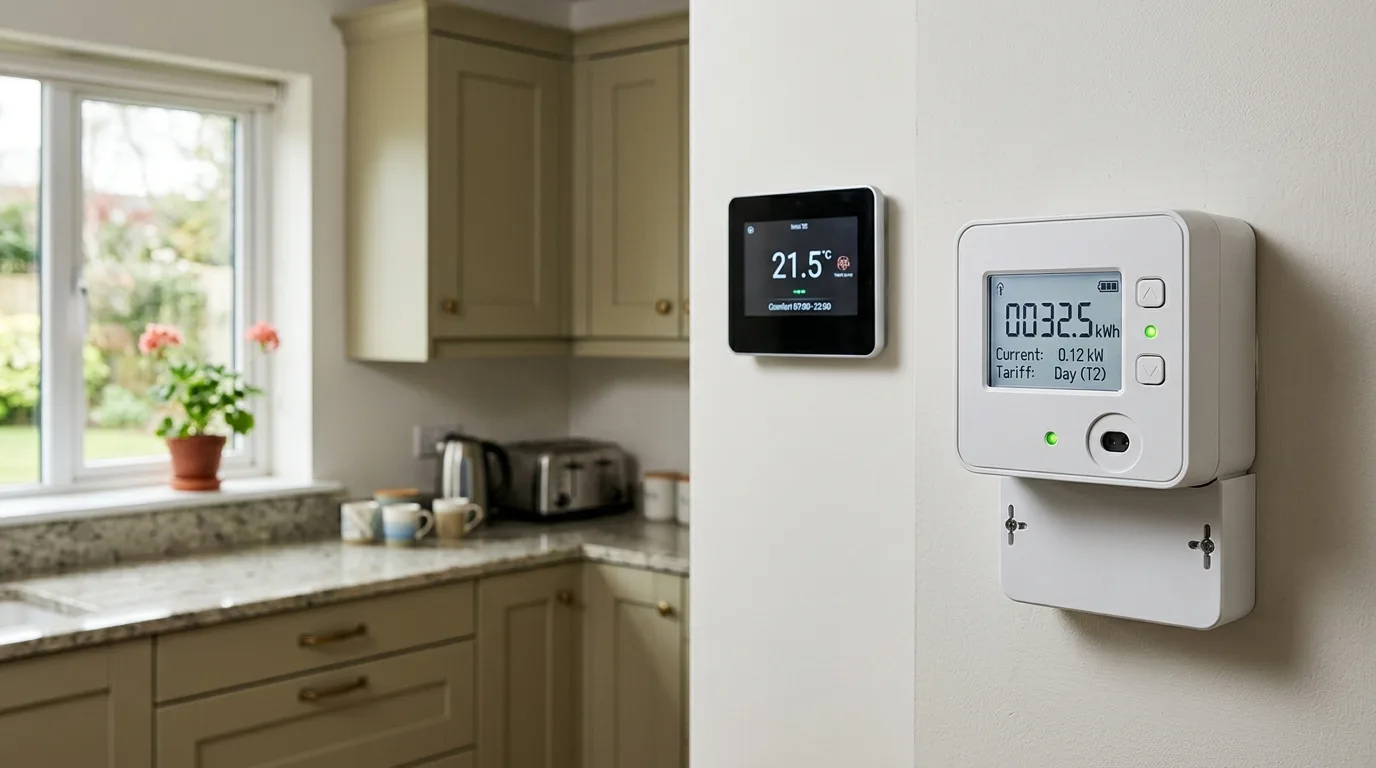
One of the most compelling reasons to install a heat pump in Ireland is the running cost advantage over oil and gas heating. But real running costs depend on specific factors: your home's size and insulation, the heat pump's SCOP, your electricity tariff, and how you manage your heating schedule. This guide works through the numbers for typical Irish homes and shows what you can realistically expect to pay.
The Key Variables
Before diving into numbers, it is important to understand the four variables that determine your heat pump running cost:
1. Annual heat demand: How much heat your home needs per year, measured in kWh. This depends on floor area, BER rating, number of occupants, and thermostat settings. A well-insulated 4-bed home might need 12,000 kWh/year; a poorly insulated one might need 22,000 kWh/year.
2. SCOP (Seasonal Coefficient of Performance): The average efficiency of your heat pump over the heating season. A SCOP of 3.5 means 3.5 kWh of heat for every 1 kWh of electricity. For Irish homes, SCOP typically ranges from 2.8 to 4.5 depending on system design.
3. Electricity tariff: The price per kWh you pay for electricity. Day-rate electricity in Ireland is approximately 26–28 c/kWh in 2026. A smart meter night-rate tariff brings this down to 11–14 c/kWh for off-peak hours.
4. Heating schedule: How much of your heat pump usage you can shift to night-rate hours through smart scheduling.
Running Cost by Home Type: Standard and Night-Rate Tariff
Formula: Electricity consumed = Heat demand ÷ SCOP Cost = Electricity consumed × tariff rate
3-Bed Semi-Detached, BER B2 (90 m²)
Annual heat demand (space + hot water): 10,500 kWh SCOP: 3.5 (upgraded radiators, smart scheduling) Electricity consumed: 3,000 kWh
| Tariff | Rate | Annual Cost |
|---|---|---|
| Standard day rate | 27 c/kWh | €810 |
| 50% night rate | 20 c blended | €600 |
| 70% night rate | 16 c blended | €480 |
4-Bed Semi-Detached, BER B2 (120 m²) — Primary Reference Example
Annual heat demand (space + hot water): 15,500 kWh SCOP: 3.5 Electricity consumed: 4,429 kWh
| Tariff | Rate | Annual Cost |
|---|---|---|
| Standard day rate | 27 c/kWh | €1,196 |
| 50% night rate | 20 c blended | €886 |
| 70% night rate | 16 c blended | €709 |
With smart scheduling (70% night rate, 30% day rate), running costs are approximately €700–€750/year — comparable to a very efficient gas boiler in a good year but without the carbon tax exposure.
4-Bed Semi-Detached, BER C1 Retrofit (120 m²)
Annual heat demand (space + hot water): 18,000 kWh (higher due to more heat loss) SCOP: 3.0 (standard radiators, 50°C flow temperature) Electricity consumed: 6,000 kWh
| Tariff | Rate | Annual Cost |
|---|---|---|
| Standard day rate | 27 c/kWh | €1,620 |
| 50% night rate | 20 c blended | €1,200 |
| 70% night rate | 16 c blended | €960 |
This illustrates why insulation and correct system design matter so much — the difference between the BER B2 and BER C1 scenario is over €250/year even with the same tariff approach.
5-Bed Detached, BER B2 (160 m²)
Annual heat demand (space + hot water): 20,000 kWh SCOP: 3.8 (underfloor heating ground floor, upgraded radiators upstairs) Electricity consumed: 5,263 kWh
| Tariff | Rate | Annual Cost |
|---|---|---|
| Standard day rate | 27 c/kWh | €1,421 |
| 70% night rate | 16 c blended | €842 |
Comparison with Oil and Gas Heating
Oil Boiler Running Cost (4-bed semi, BER B2)
Annual heat demand: 15,500 kWh Oil boiler efficiency: 90% Oil required: 15,500 ÷ 0.90 ÷ 10.35 kWh/litre = 1,665 litres Oil price (2026 average): €0.98/litre Annual fuel cost: €1,631 Plus standing charge/insurance: ~€150 Total: ~€1,781/year
Gas Boiler Running Cost (4-bed semi, BER B2)
Annual heat demand: 15,500 kWh Gas boiler efficiency: 92% Gas required: 16,848 kWh Gas unit rate: 9.5 c/kWh Annual fuel cost: €1,601 Plus standing charge: €250/year Total: ~€1,851/year
Heat Pump Running Cost (4-bed semi, BER B2, 70% night rate)
As calculated above: ~€709/year
Annual saving vs oil: ~€1,072 Annual saving vs gas: ~€1,142
These savings are in addition to the environmental benefit — heat pumps on Ireland's current electricity grid emit approximately 30–40% less CO₂ per unit of heat delivered than oil or gas, and this will improve further as the grid decarbonises.
The Night Rate Advantage: How to Maximise It
The difference between running your heat pump entirely on day rate versus maximising night rate usage is substantial. Here is how to shift usage to night rate:
Heat pump scheduling: All modern heat pump controllers allow time-of-use scheduling. Set your heat pump to pre-heat the home during cheap-rate hours (11pm–8am on most Irish smart tariffs). The home's thermal mass — especially if you have underfloor heating in a concrete slab — holds this heat for several hours.
For an overnight pre-heat cycle, a typical setting might be:
- 11pm: Heat pump runs at full load, floor screed or radiators charge to target temperature
- 4am–7am: Heat pump in standby (home holds temperature from thermal mass)
- 7am–9am: Brief top-up if needed before day rate starts
Hot water scheduling: Move hot water heating to the night rate window. Most heat pump controllers allow you to schedule the hot water cylinder heating to run during cheap hours. Set a daily hot water boost at 11:30pm or 5:00am and let the well-insulated cylinder hold the temperature until evening use.
Smart tariff options from Irish suppliers:
- Electric Ireland Smart: 11pm–8am night rate, approximately 13 c/kWh; day rate ~27 c/kWh
- Energia Smart: 11pm–8am night rate, approximately 12 c/kWh; day rate ~28 c/kWh
- SSE Airtricity Night Boost: Night window 11pm–8am, competitive rates
- Bord Gáis Energy Smart: Similar structure
Check current rates with each supplier as tariffs change regularly.
Hot Water Running Cost
Hot water heating by the heat pump at SCOP 2.5–3.0 (the heat pump works harder at higher cylinder temperatures):
- Family of 4, 3,500 kWh hot water demand
- Heat pump hot water SCOP: 2.8
- Electricity consumed: 1,250 kWh/year
- At 13 c/kWh (night rate): €163/year
Adding a solar PV system and diverter (Eddi or iBoost) can provide free hot water from surplus solar generation during spring, summer, and autumn, effectively eliminating the hot water electricity cost for 6–7 months of the year. See our guide on solar and heat pump combination.
What Increases Running Costs
The most common reasons heat pumps cost more to run than expected:
- High flow temperature: If radiators are undersized and the heat pump must run at 60–65°C, SCOP drops to 2.5–2.7, significantly increasing electricity consumption
- Standard (non-smart) tariff: Running on day rate rather than night rate adds €200–€500/year
- Poor house insulation: A higher-than-expected heat demand means more electricity consumed
- Incorrectly set controls: Weather compensation disabled, or overly aggressive thermostat settings causing frequent on/off cycling
- Legionella cycles not optimised: Running the immersion-assisted Legionella boost daily rather than weekly wastes electricity
An annual service (€80–€150) includes a check of all control settings and can identify efficiency losses early.
Get 3 free heat pump quotes — free and no obligation.
Frequently asked questions
How much does a heat pump cost to run in Ireland per year?
A typical 4-bed Irish home (BER B2) with a heat pump SCOP of 3.5 on a smart night-rate tariff pays approximately €700–€900/year for all heating and hot water. On the standard day rate, costs are €1,100–€1,300/year. Either figure is significantly less than oil (€1,700–€2,200) or gas (€1,700–€1,900).
Does a heat pump cost more than a gas boiler to run in Ireland?
No. A heat pump on a smart night-rate tariff costs approximately €700–€900/year for a 4-bed home, while a gas boiler costs €1,700–€1,900/year including the standing charge. The heat pump advantage grows each year as carbon taxes on gas increase.
What is the cheapest way to run a heat pump in Ireland?
The cheapest approach is to use a smart electricity meter with a time-of-use tariff (electric Ireland, Energia, Bord Gáis, or SSE Airtricity), schedule heating and hot water to run during the night rate window (11pm–8am at 12–14 c/kWh), and ensure your home is well-insulated so heat demand is minimised.
Do I need to change electricity supplier for a heat pump in Ireland?
You do not need to change supplier, but you should compare night-rate tariffs across Electric Ireland, Energia, Bord Gáis, and SSE Airtricity to find the best deal. You must have a smart meter installed by ESB Networks to access any time-of-use tariff.
How much does hot water cost with a heat pump in Ireland?
Hot water heating for a family of four costs approximately €150–€250/year with a heat pump on a night-rate tariff (about 3,500 kWh of heat demand at SCOP 2.8 = 1,250 kWh electricity at 13 c/kWh). Adding solar panels with a diverter can reduce this further by providing free solar electricity for the hot water immersion.
Sources & further reading
- Commission for Regulation of Utilities — Electricity Retail Market — Commission for Regulation of Utilities
- SEAI Heat Pump Technology — Sustainable Energy Authority of Ireland