Heat Pump for a Bungalow in Ireland: Everything You Need to Know
Bungalows are one of the most common house types in rural Ireland and are often excellent candidates for heat pump installation. Their single-storey layout, large roof area, and frequent use of underfloor heating make them well-suited to low-temperature heating. Here is what you need to know.
By Smart Solar Editorial · Updated 15 May 2026 · 8 min read
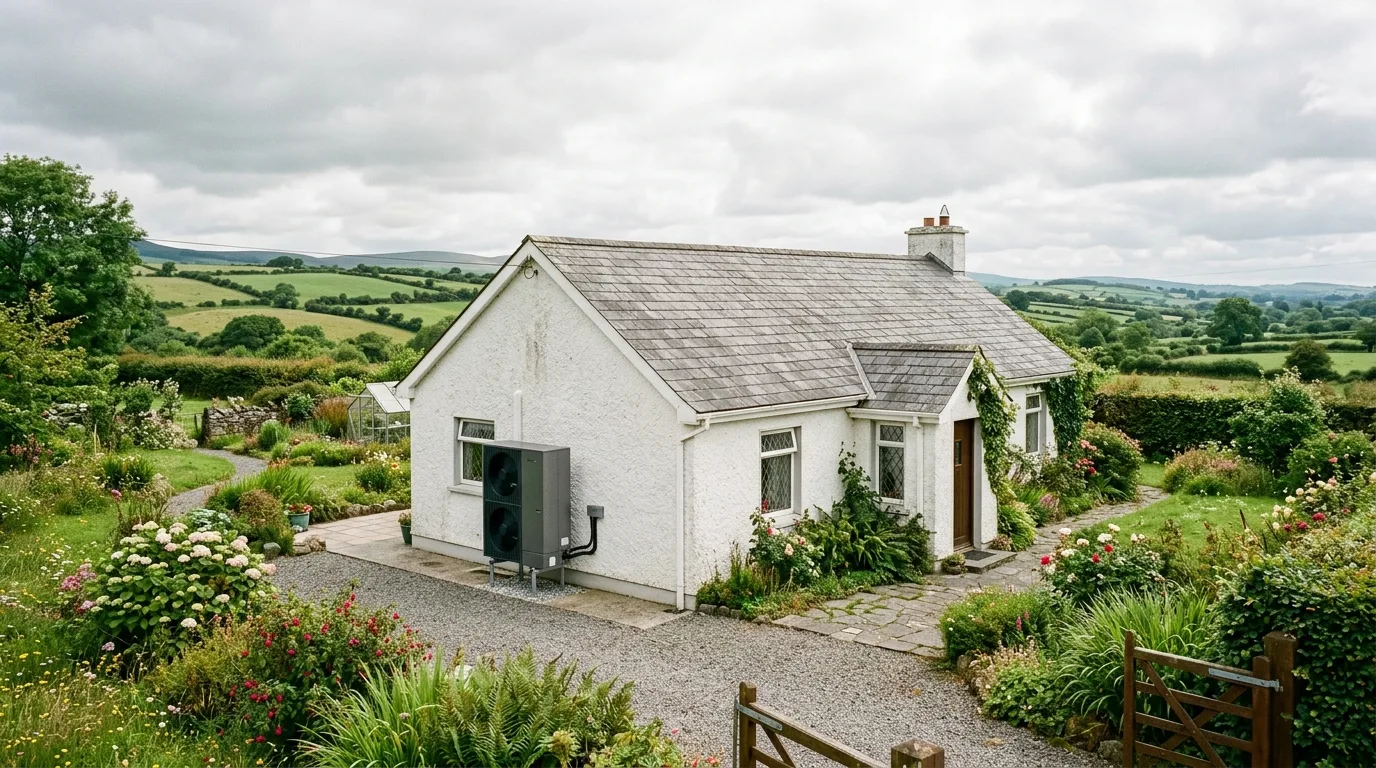
The Irish bungalow — a single-storey home typically built on a large rural site — is one of the most heat-pump-friendly house types in the country. Wide floor plans, easy access for installation, and a tradition of oil-fired central heating with radiators or underfloor systems make bungalows natural candidates for air-to-water heat pump upgrades. In 2026, with the SEAI heat pump grant at €6,500 and oil prices continuing to rise, thousands of Irish bungalow owners are making the switch.
Why Bungalows Suit Heat Pumps Particularly Well
Single-storey layout advantages: A bungalow's single-storey layout means all habitable rooms are on one level. Heat distribution from a central heating circuit is straightforward, with relatively short pipe runs and consistent heat delivery. There are no stairs to lose heat up, and room-by-room thermostatic control is easy to implement.
Underfloor heating suitability: Many Irish bungalows — particularly those built since the 1990s — were designed with underfloor heating (UFH) on a concrete slab ground floor. UFH runs at 30–40°C flow temperature, which is ideal for a heat pump. A heat pump running at 35°C flow temperature can achieve SCOP of 4.0–4.5 in a well-insulated bungalow — significantly better than the 3.0–3.2 achievable with older, smaller radiators at 55°C.
If your bungalow has radiators rather than UFH, the open single-storey floor plan often allows larger radiators to be installed at relatively low cost, bringing flow temperatures down to 45–50°C.
Oil-to-heat-pump switch: Rural bungalows — which often cannot connect to the gas network — have typically used oil boilers. Oil prices have risen sharply, and the scheduled carbon tax escalator (rising to €71/tonne CO₂ in 2026, towards €100/tonne by 2030) continues to push oil heating costs higher. A heat pump switch in a bungalow currently spending €1,600–€2,500/year on heating oil can deliver savings of €900–€1,600/year on running costs alone.
Typical Bungalow Sizes and Heat Pump Sizing
Irish bungalows range from around 80 m² (3-bedroom standard) to 180 m² (4–5 bedroom large rural homes). Heat pump sizing depends on the home's heat loss rate, which depends on floor area, insulation, window area, and air tightness.
A rough guide for typical Irish bungalows post-insulation upgrade:
| Bungalow Size | BER (Post-Retrofit) | Estimated Heat Loss | Recommended Heat Pump |
|---|---|---|---|
| 80–100 m² | B2 | 5–7 kW | 6 kW unit |
| 100–130 m² | B2 | 7–10 kW | 8–10 kW unit |
| 130–160 m² | B2 | 10–13 kW | 10–12 kW unit |
| 160–200 m² | B2 | 13–17 kW | 14–16 kW unit |
These are indicative figures. A proper heat loss calculation (EN 12831 or DEAP assessment) is required for accurate sizing and is always carried out as part of the SEAI technical assessment.
Avoid oversizing: A heat pump that is too large for the home will short-cycle — switching on and off frequently — reducing efficiency and increasing wear. Modern inverter-driven heat pumps (Daikin Altherma 3, Mitsubishi Ecodan, Samsung EHS) modulate their output to match demand, which helps, but correct sizing remains important.
Insulation Requirements for a Bungalow Heat Pump
To qualify for the SEAI €6,500 heat pump grant, your bungalow must either:
- Have a BER of B2 or better, or
- Pass a technical assessment confirming SCOP 2.5+ is achievable
Many older Irish bungalows (1970s–1990s construction) have BER ratings of C1–D1. Common insulation upgrades carried out alongside a heat pump installation include:
- Attic insulation: Bringing attic insulation up to 300 mm (Kingspan Kooltherm or Rockwool) — typically €800–€2,000 depending on attic size and access
- Wall insulation: External wall insulation (EWI) is the preferred option for solid-wall rural bungalows, costing €8,000–€15,000 but significantly improving BER and comfort
- Floor insulation: If the bungalow has a suspended timber floor, insulation can be added between joists; concrete slabs are harder to retrofit but insulated screed can be laid above with underfloor heating
- Windows and doors: Replacing single-glazed or 1990s double-glazed windows with modern triple-glazed units — €8,000–€15,000 for a full bungalow
SEAI's One Stop Shop programme can bundle insulation upgrades and heat pump installation into a single grant-supported package, simplifying the process considerably.
Choosing the Right Heat Pump Brand for a Bungalow
For a typical 100–130 m² bungalow in Ireland, popular heat pump choices include:
Daikin Altherma 3 R (8–10 kW): Excellent SCOP at low flow temperatures, ideal for bungalows with underfloor heating. Daikin's Onecta app provides comprehensive monitoring and scheduling.
Mitsubishi Ecodan Ultra Quiet (8.5–11.2 kW): As the name suggests, this range prioritises low noise — important if neighbours are close by. Very reliable and widely installed in Ireland.
Grant Aerona⁴ R290 (6–13 kW): A Grant-manufactured Irish product using natural R290 (propane) refrigerant. Strong local support network, particularly in rural counties.
Samsung EHS Mono HQ (8–12 kW): Compact outdoor unit, good cold-weather performance, integrates with Samsung SmartThings for smart home scheduling.
Joule Cyclone Aire: An all-in-one solution with the heat pump and hot water cylinder in a single indoor unit (monoblock), which reduces installation time and outdoor unit siting concerns.
Hot Water for Bungalows
Most Irish bungalows have a hot water cylinder, which simplifies the heat pump installation. The existing cylinder may need to be replaced with a larger, better-insulated unit (200–250 litres for a 4-bedroom bungalow) that has a heat pump coil and an immersion element for Legionella protection cycles.
If your bungalow has a gas combi boiler (uncommon in rural areas but possible near towns), you will need to add a hot water cylinder — typically €1,000–€1,500 installed, and already included in most comprehensive installer quotes.
Bungalow Installation: Practical Considerations
Outdoor unit placement: Most bungalows have ample space on the side or rear of the property. The outdoor unit requires 500 mm clearance on each side and 1,000 mm in front for airflow. Avoid placing it directly below bedroom windows if noise is a concern.
Electrical supply: The heat pump requires a dedicated 230 V single-phase supply (up to about 11–12 kW output) or 3-phase supply for larger units. Your electrician will assess whether your existing consumer unit needs upgrading.
Smart meter: If you do not already have an ESB Networks smart meter, request one before your heat pump goes live. This enables time-of-use night-rate tariffs from Electric Ireland, Energia, SSE Airtricity, or Bord Gáis that can save €300–€500/year.
Expected Running Costs for a Bungalow
For a 120 m² rural bungalow, BER B2 after retrofit, 4 occupants:
- Annual heat demand (space + hot water): ~14,000 kWh
- Heat pump SCOP: 3.8 (underfloor heating, well-insulated)
- Annual electricity for heating: ~3,684 kWh
- Cost at 13 c/kWh (night rate blended): ~€479/year
Compared to oil heating at 1,400 litres/year × €1.00/litre = €1,400/year in fuel alone, this represents a saving of approximately €920/year.
Over 20 years, at today's prices (and oil prices are expected to rise further), the cumulative saving exceeds €18,000 — well above the net installation cost of €8,500–€15,000 after the SEAI grant.
Get 3 free heat pump quotes — free and no obligation.
Frequently asked questions
Is a heat pump suitable for an older Irish bungalow?
Yes, provided the bungalow has adequate insulation (or insulation is upgraded as part of the project). A technical assessment can confirm suitability even if the BER rating is below B2. Many 1980s and 1990s bungalows achieve excellent heat pump performance after attic and wall insulation upgrades.
What size heat pump does a 3-bed bungalow need in Ireland?
A 3-bedroom bungalow of 90–110 m² with BER B2 typically needs a 6–8 kW heat pump. The exact size depends on a heat loss calculation. Oversizing is common and harmful to efficiency — always insist on a proper EN 12831 heat loss calculation.
Can I use a heat pump with underfloor heating in my bungalow?
Absolutely, and this is the optimal combination. Underfloor heating runs at 30–40°C flow temperature, which is exactly where heat pumps achieve their highest efficiency (SCOP 4.0+). If your bungalow already has underfloor heating, a heat pump upgrade is particularly straightforward.
How long does heat pump installation take in a bungalow?
A typical air-to-water heat pump installation in a bungalow takes 2–4 days for an experienced team. This includes fitting the outdoor unit, indoor hydraulic module, hot water cylinder, controls, and commissioning. Any insulation works are usually done as a separate prior stage.
Do I need planning permission for a heat pump on my bungalow?
In most cases, no. Domestic heat pump installations are exempt from planning permission under Irish planning regulations, provided the outdoor unit does not protrude above the roofline and complies with noise and setback requirements. Always check with your local county council if you are near a protected structure or in an area with specific planning conditions.
Sources & further reading
- SEAI Heat Pump Grant — Sustainable Energy Authority of Ireland
- SEAI One Stop Shop Retrofit — Sustainable Energy Authority of Ireland