Is Commercial Solar Worth It in Ireland in 2026? A Decision Framework
Solar PV is not a universal yes for Irish businesses. Use this framework to test load profile, roof, tariff and grid before committing capex.
By Smart Solar Editorial · Updated 6 October 2026 · 10 min read
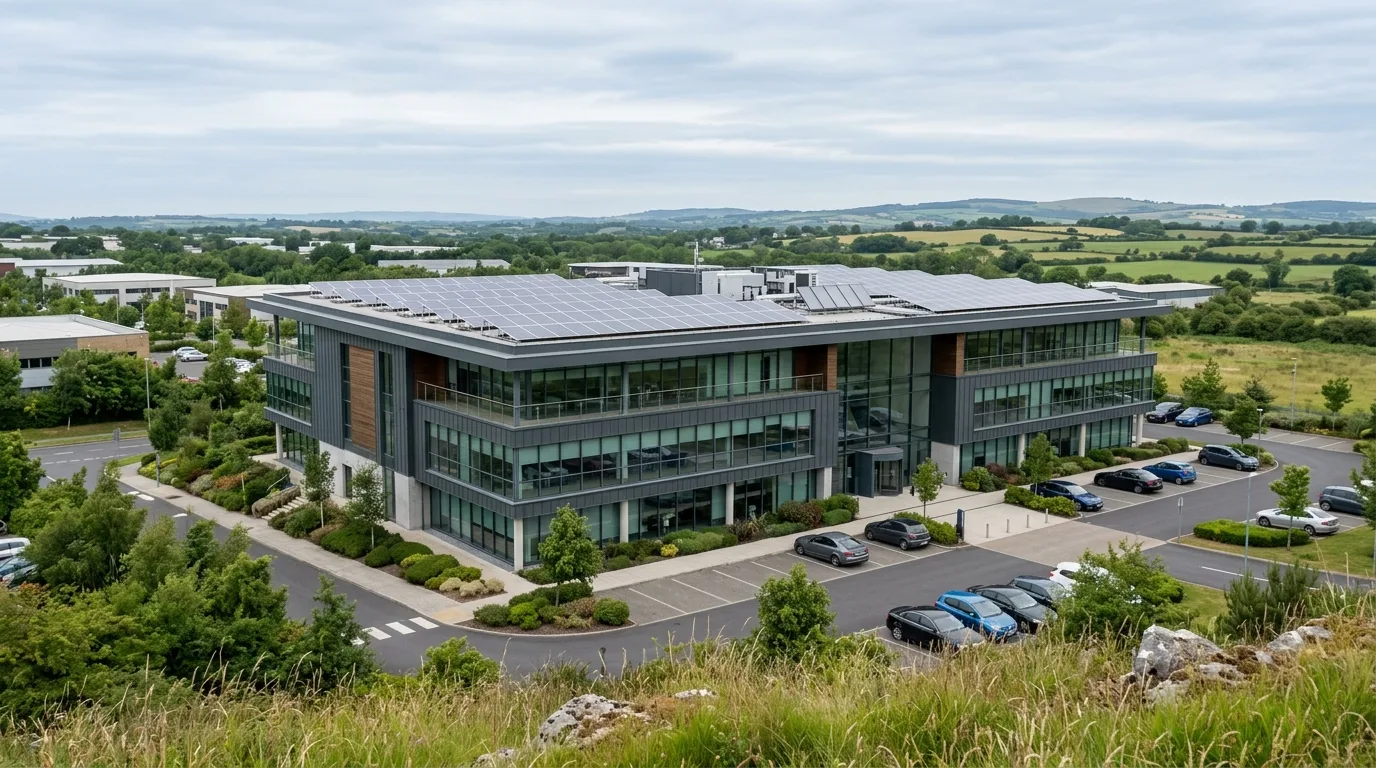
Commercial solar PV in Ireland is one of the few capex decisions with a near-guaranteed payback - but only if four conditions line up. This article gives you the same one-page decision framework an experienced advisor would run before signing off a 200 kWp project.
The four-factor test
Before looking at any quote, score your site against these four factors. If three or four are green, solar will almost certainly make sense. If two are green, the business case is borderline and needs careful sizing. If only one is green, the project is unlikely to clear a 7-year payback.
Factor 1: Daytime load profile
PV generates between roughly 08:00 and 18:00 in summer and 10:00 and 15:00 in winter. The more of that energy you consume on-site at retail rates (25-32 c/kWh in 2026), the better. Export at the MSS Clean Export Guarantee non-domestic rate is currently around 13-15 c/kWh - less than half the retail value.
- Green: 70%+ of consumption falls Monday-Friday 09:00-17:00.
- Amber: 50-70% daytime consumption.
- Red: Below 50% daytime, or load is highly seasonal and counter-cyclical to solar.
Factor 2: Roof or land
You need somewhere to put the panels.
- Green: Single-pitch metal roof under 15 years old, 500+ m², south or east-west orientation, free of significant shading.
- Amber: Older metal roof, asbestos requiring removal, or multiple small pitches.
- Red: Slate roof on a protected structure, heavy HVAC clutter, or a tenant lease with under 7 years remaining and no landlord cooperation.
Ground-mount can rescue many roof-red sites if you have a half-acre or more of unproductive land.
Factor 3: Grid headroom
ESB Networks will tell you what you can export through the NC7 process. If the local network is constrained, you may be capped at zero export, which forces you to size strictly to daytime load.
- Green: MIC of 100 kVA+ and standard urban or suburban grid.
- Amber: Rural location but no known constraint.
- Red: Known constrained area or sub-50 kVA MIC with no upgrade appetite.
Factor 4: Tariff and contract length
The higher your unit rate, the faster solar pays back. Sites still on legacy fixed-price contracts at 19 c/kWh have weaker business cases than those on day-ahead-linked tariffs at 30 c/kWh+.
- Green: Day-ahead-linked tariff or current unit rate above 25 c/kWh.
- Amber: Fixed contract above 22 c/kWh with renewal within 24 months.
- Red: Long fixed contract below 20 c/kWh with no early-exit clause.
Six scenarios where Irish commercial solar almost always wins
- Food processor or cold store running 24/7 with 60-80% daytime electrical load and roof above 1,000 m². Payback typically 3-5 years.
- Manufacturing SME with a 9-5 shift pattern, three-phase 200 kVA supply and 800 m² of standing-seam roof. Payback typically 4-5 years post-grant.
- Dairy farm with parlour, robots and bulk tank cooling, plus 500 m² of shed roof and an annual consumption above 80,000 kWh. Payback often under 4 years after NDMG.
- Hotel or leisure centre with year-round daytime load from kitchens, pumps and HVAC. Payback 4-6 years.
- Logistics warehouse with EV charging and forklift charging adding daytime load to compensate for low overnight base load. Payback 4-6 years.
- Office park with rooftop solar feeding shared landlord supply for HVAC and lifts. Payback 5-7 years.
Three scenarios where commercial solar is harder to justify
- Pure overnight operation such as a nightclub or some 24/7 sectors with very low daytime load. Export-only economics rarely clear 8-year payback.
- Heritage or protected structure where roof works are restricted, and ground-mount is not available.
- Short tenancy where the lease has under 5 years to run, the landlord will not co-invest and the equipment cannot be removed.
The 60-minute CFO check
If you only have one hour, do this:
- Pull 12 months of half-hourly consumption from your supplier or MPRN data agent.
- Calculate your average weekday daytime kWh.
- Multiply by 0.25 (rough Irish solar capacity factor) to get a target kWp ceiling.
- Multiply target kWp by €1,200 to get rough capex.
- Subtract the estimated NDMG grant (enhanced bands to 6 July 2027: €4,800 for the first 6 kWp, then €600, €400 and €300 per kWp, capped at 45% of cost and €325,200).
- Divide net capex by (daytime kWh saved x 0.27 + export kWh x 0.14).
If the result is under 6 years, the project deserves a proper feasibility study from an SEAI-registered EPC such as Activ8 Solar Energies, Enerpower, Powerlink, Solar Electric Ireland or ESB Smart Energy Services.
Hidden value beyond payback
The straight payback number ignores three things that often tip borderline cases:
- Carbon disclosure. Larger customers (especially in food, pharma and tech) now require Scope 2 reductions from suppliers.
- Property value. Industrial estates with solar typically command modestly higher rents and lower yields.
- Tariff hedge. Solar locks in roughly 0% inflation for 25 years on the kWh it generates. That is a financial product almost no other investment offers.
Common pitfalls that wreck the business case
Even on green-light sites, three mistakes regularly turn a 4-year payback into a 7-year one:
- Oversizing without storage. A 200 kWp array on a site with 70 kW daytime baseload exports 55–65% of generation at 13–15 c/kWh while displacing only the 70 kW you actually use. A 150 kWh battery typically lifts self-consumption from ~45% to ~80% and adds 12–18 months of payback while shortening overall NPV breakeven.
- Ignoring MIC (Maximum Import Capacity). If your contracted MIC is 100 kVA but your peak is 85 kVA, you have only 15 kVA of headroom before triggering an ESB MIC upgrade — which can cost €5k–€40k and add 12–20 weeks. Confirm export MEC headroom before signing the EPC contract.
- Day-one O&M neglect. Skipping the €1,200–€2,500/year O&M contract typically costs 3–5% annual yield within three years (soiled modules, undetected string faults, drifting inverter firmware). On a 200 kWp site that is €4,000–€6,000 of avoidable lost generation per year.
Bottom line
Most Irish commercial sites with a daytime load and an intact roof should be on solar by 2027. The question is rarely whether to do it, but how big and when. Run the four-factor test honestly, get an NC7 quote early, and the rest is engineering.
Get 3 free commercial solar quotes — free and no obligation.
Frequently asked questions
What is a typical payback period for commercial solar in Ireland in 2026?
After the Non-Domestic Microgen Grant and ACA tax relief, most Irish commercial systems pay back in 3-6 years, with the fastest paybacks on sites that self-consume above 80% at retail tariffs over 28 c/kWh.
What internal rate of return should I expect from commercial solar?
A well-designed Irish commercial PV project typically delivers an IRR of 15-25% over a 25-year horizon when modelled with reasonable degradation and inflation assumptions.
Is solar worth it for a business with mostly overnight operations?
Usually no, unless paired with battery storage or sized purely for the small daytime base load. Pure export economics at the MSS non-domestic tariff rarely clear an 8-year payback.
Does my building need a high BER to qualify for solar grants?
The Non-Domestic Microgen Grant requires a valid BER and broadly targets buildings at BER B or with a committed pathway to upgrade. Older buildings often need an envelope upgrade run alongside the solar project.
Sources & further reading
- Non-Domestic Microgeneration Grant — SEAI
- Microgeneration Support Scheme — Department of the Environment, Climate and Communications
- Clean Export Guarantee Tariffs — Commission for Regulation of Utilities