Insurance for Commercial Battery Storage in Ireland 2026
Irish insurers have stepped up underwriting standards for commercial BESS. Premiums range €4k-€15k/yr for typical systems. Here is what underwriters expect and how to present a strong case.
By Smart Solar Editorial · Updated 15 May 2026 · 8 min read
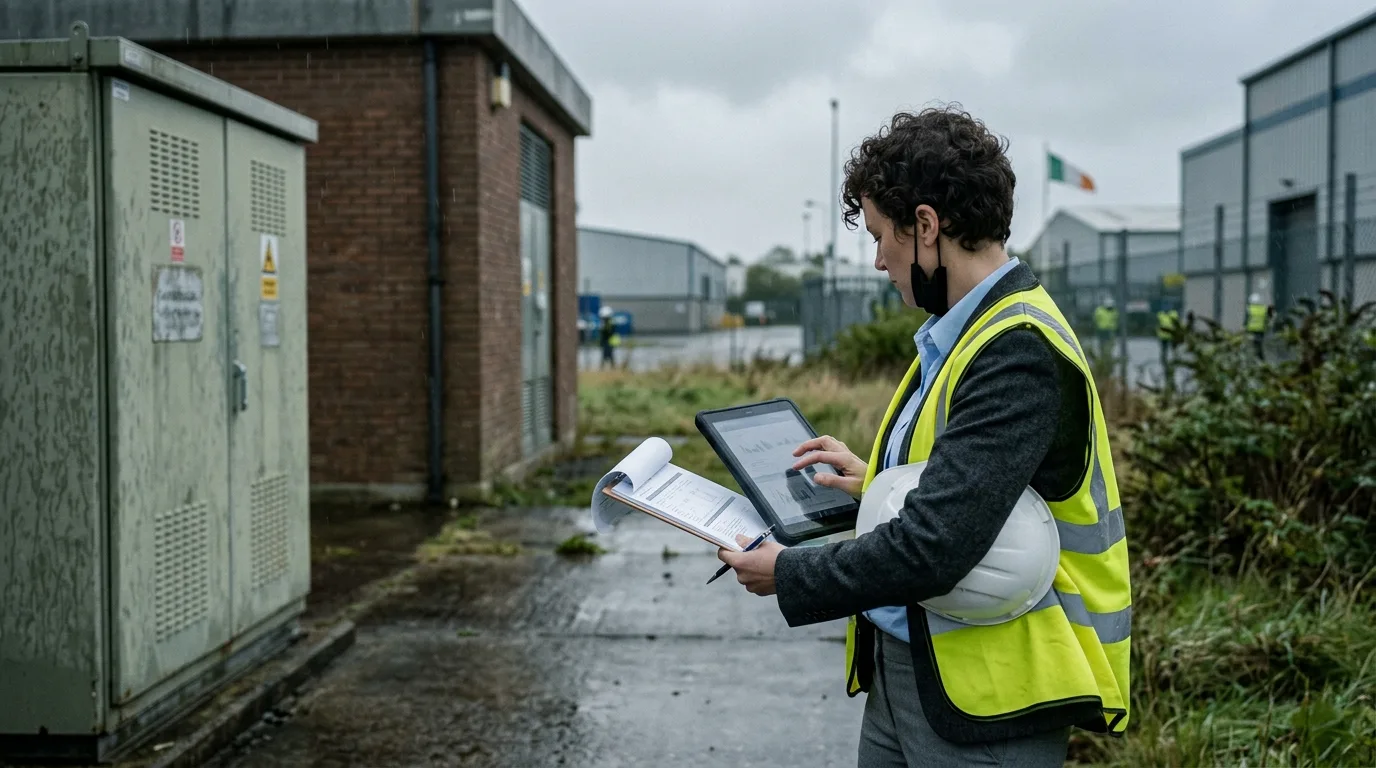
Insurance is one of the most consequential and least-anticipated aspects of a commercial battery storage project in Ireland. Through 2024-2026, Irish insurers have substantially tightened underwriting standards for BESS, requiring evidence of IS EN 62619 compliance, fire engineering reports, and adherence to specific operational protocols. Getting insurance right at procurement stage is significantly cheaper than fixing it post-installation. This article walks through what Irish insurers want, what premiums look like, and how to present a strong case.
The four insurance lines that touch BESS
A commercial BESS interacts with multiple insurance policies:
1. Commercial property insurance. Covers the physical asset, the building it sits in or near, and contents. The premium uplift for adding a BESS sits here.
2. Business interruption insurance. Covers loss of revenue from BESS failure or BESS-caused incident. Underwriters increasingly scrutinise this for sites where the BESS is operationally critical.
3. Public/product liability insurance. Covers third-party injury or damage from BESS-related events. Premiums adjust modestly with BESS presence.
4. Specific BESS / clean technology insurance. Some specialist insurers (Munich Re, Swiss Re, Mauve, GCube) offer dedicated BESS policies, often required for utility-scale or front-of-meter projects.
For typical mid-size Irish commercial BESS (250 kWh - 4 MWh), most coverage flows through existing commercial property and liability policies with premium uplifts and additional conditions.
Active Irish BESS insurers in 2026
Irish commercial property insurers that have built BESS underwriting capability:
- Aviva Ireland - extensive 2024-2026 commercial BESS underwriting
- Allianz Ireland - active commercial portfolio
- AXA Ireland - increasing BESS focus
- FBD Insurance - mid-market commercial including BESS
- RSA Ireland - long-standing energy infrastructure underwriting
- Zurich Ireland - large commercial and corporate
- Munich Re / GCube - specialist utility-scale and complex BESS
Brokers playing a meaningful role in BESS placements: Marsh, Willis Towers Watson, Howden, Aon, Arachas, Lockton.
Typical premium ranges 2026
For a 1 MWh / 500 kW commercial BESS at a well-run Irish industrial site:
- Year 1 premium uplift on existing commercial property insurance: €5,000-€12,000
- Years 2-5 stable premium: €4,000-€8,000/yr
- Years 6-15: often reduces as insurer data on Irish BESS claims experience improves
Premium varies significantly by:
- Cell chemistry (LFP attracts ~30% lower premium than NMC)
- IS EN 62619 compliance evidence
- Fire suppression specification
- Distance to fire service
- Separation distance from buildings and boundaries
- Site security and access control
- Operator competence and EMS monitoring
- Maintenance contract quality
A well-presented project hits the lower premium band; a poorly-documented one hits the upper band - or risks coverage refusal.
What insurers actually want to see
A complete insurer information package for an Irish commercial BESS typically includes:
1. Equipment specification
- Vendor and model (Tesla, Sungrow, BYD etc.)
- Cell chemistry (LFP strongly preferred)
- IS EN 62619 certificate / test reports
- UL 9540A test reports (for larger systems)
- Manufacturer warranty terms
2. Fire engineering documentation
- Fire engineering report by chartered fire engineer
- Fire suppression system specification (Novec, FM-200, aerosol)
- Smoke and gas detection plan
- Thermal monitoring specification
- Emergency disconnect access
3. Installation and operational details
- Single-line diagram
- Site layout showing separation distances
- Building Control compliance evidence
- Fire Safety Certificate (where applicable)
- Local Fire Officer engagement record
- EMS specification and remote monitoring capability
4. O&M arrangements
- O&M contract with named provider
- Annual maintenance schedule
- Cell health monitoring protocols
- Software update procedures
- Emergency response plan
5. Operator competence
- Operator training records
- Emergency response training
- Local Fire Brigade familiarisation
Submitting this package upfront often unlocks better terms than negotiating after a basic submission.
Common insurer conditions and exclusions
Typical conditions in 2026 Irish BESS insurance policies:
- Mandatory IS EN 62619 compliance - non-compliant systems are uninsurable
- Annual third-party inspection of fire suppression and detection
- Quarterly cell health reports retained on file
- 24/7 remote monitoring with named operator
- No use of non-OEM cells or third-party retrofit components
- Specific exclusions for events related to known failure modes (thermal runaway from cell defects, etc.)
- Maximum aggregate cover limit based on BESS value plus reasonable BI
- Sub-limits for specific perils (water damage, theft of cells)
Read these carefully - some exclusions can be negotiated with appropriate risk mitigation.
Pre-installation insurer engagement
Best practice in 2024-2026 Irish commercial BESS projects:
- Engage broker at design stage (not after equipment selection)
- Get indicative quotes from 2-3 insurers before committing to vendor
- Build insurer requirements into EPC tender (avoid mid-build surprises)
- Submit complete package at risk assessment stage
- Invite insurer site visit before commissioning
- Confirm coverage live before energising
Skipping these steps risks discovering that coverage is unavailable or prohibitively expensive after €500k+ has been committed.
Insurance interaction with EPC contract
Your EPC contract should explicitly address insurance:
- Construction All Risk (CAR) insurance during build (typically EPC-procured)
- Hand-over of cover at commissioning - clear transfer to operational policy
- Liability for defective equipment persisting beyond warranty
- Cooperation with insurer investigations post-incident
- Indemnity for installation defects causing insured losses
These provisions are not standard - they need to be negotiated into the EPC contract during tender.
Claims experience in Ireland 2024-2026
There have been no major LFP commercial BESS losses in Ireland through 2024-2026. International experience has been favourable for LFP systems with proper fire engineering. The few notable global incidents have been either:
- NMC chemistry with inadequate thermal management
- Older lead-acid or first-generation lithium installations
- Inadequate fire suppression in indoor installations
- Cell defects from poor quality control
Irish underwriters tend to view modern LFP systems with credible fire engineering as good risks - which is reflected in steadily falling premiums.
Premium reduction strategies
Practical ways to reduce BESS insurance premium:
- Specify Tier-1 LFP from the start (Tesla, Sungrow, BYD)
- Use outdoor containerised installations with generous separation (vs indoor)
- Specify liquid-cooled with active thermal management
- Include UL 9540A tested products where possible
- Document operational protocols and training
- Use Tier-1 EPC contractors with BESS track record
- Include O&M contract with named OEM-approved provider
- Engage local Fire Officer formally during design
When specialist BESS insurance is needed
For projects above ~10 MWh or front-of-meter (no host site), specialist BESS insurance becomes standard:
- Munich Re, Swiss Re, Mauve, GCube write dedicated policies
- Higher premiums but broader cover
- Cycle warranty stacking and component-specific cover
- Multi-year cover with predictable renewal terms
Lloyd's syndicates and London market insurers active in Irish utility-scale BESS through specialist brokers.
Bottom line
Commercial BESS insurance in Ireland in 2026 typically adds €4k-€12k/yr to commercial property premiums, with premium driven by cell chemistry, fire engineering quality and operational competence. Engage your broker at design stage, build insurer requirements into EPC tender, submit a complete documentation package, and you should land in the lower premium band. Skipping this discipline risks coverage refusal or excess premium that erodes project IRR.
Get 3 free commercial battery quotes — free and no obligation.
Frequently asked questions
How much does insurance cost for a commercial battery in Ireland?
Typical year-one premium uplift on existing commercial property insurance is €5k-€12k for a 1 MWh BESS. Premium stabilises at €4k-€8k/yr from year 2. LFP chemistry, IS EN 62619 compliance and good fire engineering significantly reduce premium.
Do all insurers cover commercial battery storage in Ireland?
Most major Irish insurers (Aviva, Allianz, AXA, FBD, RSA, Zurich) now write commercial BESS as part of standard commercial property policies. For utility-scale or complex projects, specialist BESS insurers (Munich Re, GCube, Mauve) often place coverage.
What documentation do insurers want for a BESS?
Equipment specifications with IS EN 62619 compliance, fire engineering report, suppression and detection systems, single-line diagram, separation distances, O&M contract, operator training records, and EMS monitoring capability. A complete package upfront unlocks better terms.
Can an NMC battery be insured in Ireland?
Yes but with higher premiums (~30% above LFP), tighter conditions, and more limited insurer choice. Most new commercial BESS in Ireland in 2026 use LFP partly for this reason. NMC remains acceptable but is no longer the easy underwriting choice.
Does BESS need separate insurance from my commercial property policy?
For most mid-size commercial BESS, no - it is added as an endorsement to existing commercial property and liability policies. For utility-scale, front-of-meter or particularly complex projects, dedicated BESS policies from specialist insurers are standard.
Sources & further reading
- Insurance Ireland — Insurance Ireland
- Central Bank of Ireland Insurance Information — Central Bank of Ireland