Home Battery Fire Safety in Ireland: What Every Homeowner Must Know
Modern LFP batteries are significantly safer than older NMC units, but fire safety requirements still apply to all home battery installations in Ireland. Here's what you need to know.
By Smart Solar Editorial · Updated 15 May 2026 · 8 min read
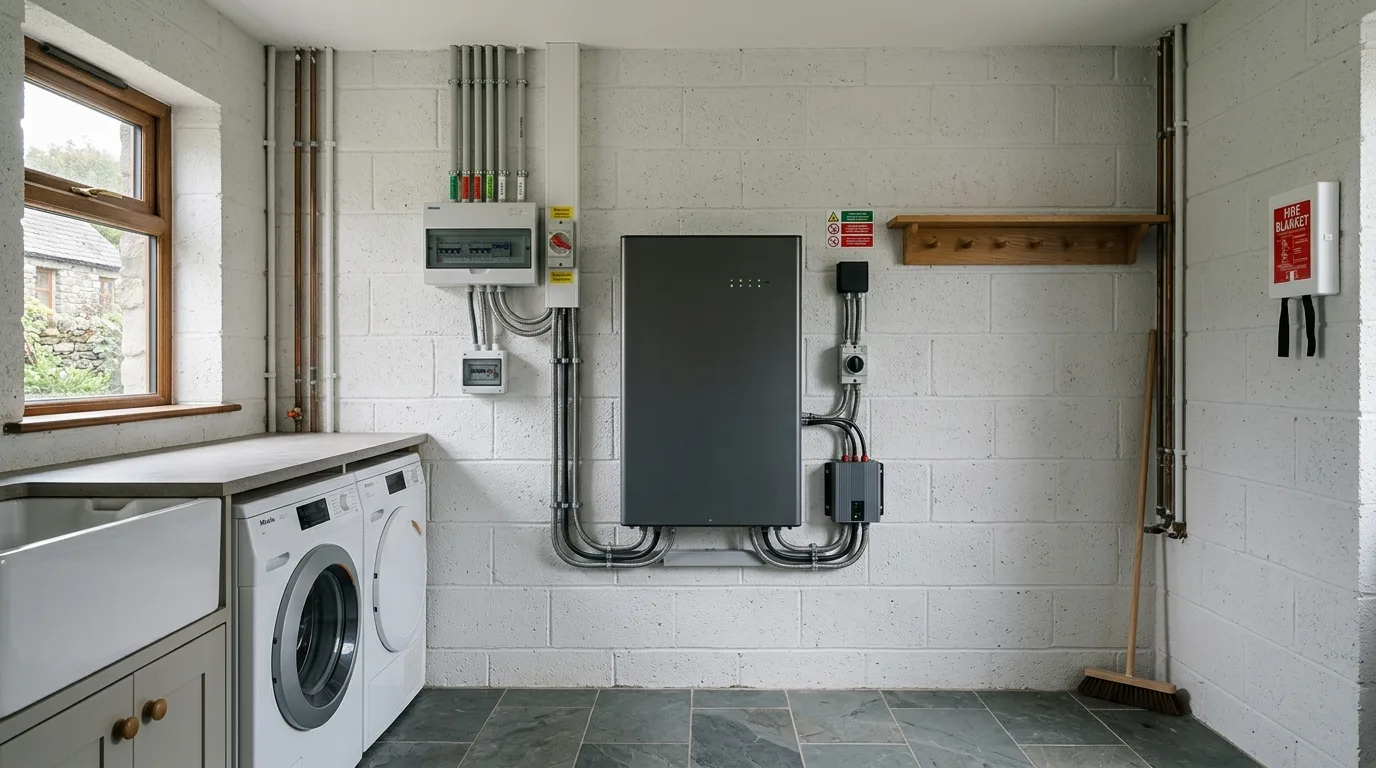
How Safe Are Home Batteries in Ireland?
The short answer: modern LFP (lithium iron phosphate) home batteries installed correctly are very safe. The probability of a fire from a properly installed, quality LFP battery is extremely low — far lower than the risk from many other household appliances and electrical equipment.
That said, battery fire safety is a serious topic that deserves honest, accurate treatment. When fires do occur — typically from poor-quality cells, incorrect installation, physical damage, or poor battery management — lithium battery fires are difficult to extinguish and can release toxic gases. Understanding the risks, the safeguards, and your responsibilities protects you, your family, and your home.
Understanding Battery Fire Risk: Chemistry Matters
LFP (Lithium Iron Phosphate) — Lower Risk
LFP is the dominant chemistry in Irish home batteries in 2026 (GivEnergy, BYD, Tesla Powerwall 3, Sonnen, Huawei LUNA, FoxESS). Its chemical structure is thermally stable: the iron-phosphate bond releases oxygen very slowly even under severe stress (overcharge, puncture, external heat).
LFP batteries can undergo thermal runaway — the self-sustaining exothermic reaction that characterises lithium battery fires — but only under extreme conditions. The threshold temperature is significantly higher for LFP (~270°C) than for NMC (~200°C). This means LFP batteries take much longer to ignite in a fire scenario and are less likely to do so at all.
Irish fire investigation data shows LFP home batteries have an extremely low fire incidence when installed to manufacturer specifications.
NMC (Nickel Manganese Cobalt) — Higher Risk
Older home batteries using NMC chemistry (some LG Chem RESU units, older Tesla Powerwall 2 units from pre-2024) have a lower thermal runaway threshold. NMC fires are more energetic when they occur and more difficult to extinguish.
If you have an older NMC battery installed in your home, apply all the fire safety measures in this guide with particular care. LFP systems being installed new in 2026 carry significantly lower inherent risk.
What Causes Battery Fires
In the rare cases where home battery fires have occurred, the root causes include:
-
Cell manufacturing defects: Sub-standard cells with internal short circuits from poor quality control. Risk mitigation: only buy from reputable brands with established cell supply chains (BYD in-house, CATL, EVE for major brands).
-
Physical damage: A battery that has been dropped, crushed, or punctured is vulnerable. Never install a visibly damaged battery; inspect any unit that has been dropped before powering it.
-
Overcharging: If the Battery Management System (BMS) fails to cut off charging at the correct voltage, cells can overheat. Modern BMS systems have multiple redundant cut-offs, making this very unlikely in quality products.
-
Installation errors: Incorrect wiring, undersized cables, incorrect fuse protection, or poor earthing can create fault conditions that lead to fires. This is why ETCI-certified installation by a registered electrician is essential.
-
External fire exposure: If an adjacent appliance (tumble dryer, washing machine, fuse board) catches fire, the battery may be involved. Adequate separation reduces but cannot eliminate this risk.
-
Flooding/water damage: Water ingress into an indoor battery can cause short circuits. Irish homes should be aware of flooding risk; batteries in basement locations should have adequate IP ratings (IP55 minimum) and be elevated off the floor.
Legal and Regulatory Requirements in Ireland
ETCI Wiring Regulations (IS 10101 / HD 60364)
All home battery installations in Ireland must comply with the ETCI National Rules for Electrical Installations (IS 10101), which align with European standard HD 60364. Your installer must issue an ETCI Completion Certificate (also called an "electrical contractor's completion certificate") confirming the installation complies with these regulations.
Do not accept a battery installation without an ETCI Completion Certificate. This document is also required for insurance purposes.
IEC 62619 — Battery Safety Standard
Batteries sold in Ireland must comply with IEC 62619 — the international safety standard for secondary lithium cells and batteries used in stationary applications. This covers electrical safety, mechanical strength, thermal management, and the BMS performance.
Check that your battery brand/model is certified to IEC 62619. Major brands (BYD, GivEnergy, Sonnen, Tesla, Huawei) all hold this certification. Be cautious of obscure brands that cannot demonstrate certified compliance.
Irish Building Regulations (Part B — Fire Safety)
The installation must comply with Part B (Fire Safety) of the Irish Building Regulations (Technical Guidance Document B). Key requirements:
- Battery must not be installed in a room used for sleeping
- Battery location must not impede means of escape from the dwelling
- Cable routes through walls, floors, and ceiling must be fire-stopped with approved materials (intumescent sealant or equivalent)
- Any penetrations through fire-rated walls or floors must maintain the fire rating of the structure
In practice, a utility room or integral garage installation by a competent installer will naturally satisfy these requirements. The fire-stopping of cable routes is often overlooked by less experienced installers — confirm this is done.
Integral Garage Requirements
If the battery is installed in an integral garage, the door between the garage and the house must be FR30 (30-minute fire resistant). This is already a building regulation requirement for integral garages in Ireland, independent of battery installation. If your internal garage door doesn't meet this standard, it must be upgraded before (or as part of) the battery installation.
Practical Fire Safety Measures for Homeowners
During Installation
- Use a registered, qualified installer: SEAI-registered installer; RECI-registered electrician. Confirm ETCI completion certificate will be provided.
- Check clearances: Minimum 300 mm from any combustible material (wood, cardboard, plastic insulation boards). 600 mm preferred.
- Confirm fire-stopping: All cable routes through walls and floors must be fire-stopped.
- Install a smoke detector: If not already present, a working smoke alarm in the utility room or garage where the battery is installed is strongly recommended. Many insurers now specifically ask about this.
- Isolation switch: A clearly labelled emergency isolation switch must be accessible adjacent to the battery.
After Installation
- Install a smoke alarm in the battery room if one isn't already present.
- Keep the area around the battery clear: No cardboard boxes, no stored chemicals, no combustible materials within 600 mm.
- Check the battery periodically: Look for any physical damage, swelling of the battery module (a sign of cell degradation or gas buildup), unusual smells, or discolouration.
- Don't store flammable materials nearby: Petrol cans, solvents, paint — do not store these in a utility room or garage with a battery.
- Know the isolation switch location: All household members above 12 years of age should know where the battery isolation switch is and how to use it.
In the Event of a Fire
If a battery fire occurs:
- Do not attempt to extinguish a lithium battery fire with water — water can accelerate the reaction in some circumstances.
- Leave the building immediately — lithium battery fires produce toxic gases (hydrogen fluoride, carbon monoxide).
- Call 999/112 — alert the fire service that a lithium battery is involved.
- Do not re-enter until the fire service confirms it is safe — lithium battery fires can reignite hours later.
- Advise the fire service of the battery chemistry (LFP or NMC) if known.
For LFP batteries, large volumes of water applied externally (cooling the cells) is the fire service standard approach. Do not attempt this yourself.
Insurance Implications
Home insurance policies in Ireland are beginning to ask specifically about home battery storage. Notify your insurer when you install a battery — failure to do so may invalidate your home insurance.
Most major Irish home insurers (Allianz, Aviva, AXA, FBD) will cover home batteries provided:
- The battery is installed by a registered electrician
- An ETCI Completion Certificate has been issued
- The battery complies with relevant safety standards
- You have notified the insurer of the installation
Some insurers may apply a small premium increase for battery storage. Shop around — the difference between insurers can be significant. The ETCI certificate and brand certification to IEC 62619 are your strongest evidence of safe installation.
DTISS (Domestic Technical Inspection and Safety Scheme)
Some Irish local fire authorities and building inspection services have developed guidance for home battery installations. Check with your local authority fire service if you have specific questions about fire safety in your planned installation location.
Get 3 free battery storage quotes — free and no obligation.
Frequently asked questions
Is a home battery dangerous to have in my house?
Modern LFP batteries installed correctly by qualified electricians are very safe. The fire risk is extremely low for quality brands (BYD, GivEnergy, Tesla, Sonnen) installed to ETCI regulations. LFP chemistry is specifically chosen for home storage because it's far less prone to thermal runaway than older NMC chemistry.
What fire safety equipment should I have with a home battery?
At minimum: a working smoke alarm in the room where the battery is installed, a clear and labelled isolation switch adjacent to the battery, and nothing combustible within 300–600 mm of the battery. Your installer should also fire-stop all cable routes through walls and floors.
Do I need to tell my insurance company about a home battery?
Yes. Always notify your insurer when adding a home battery. Failure to declare it may invalidate your home insurance. Most major Irish insurers will cover batteries installed by registered electricians with ETCI completion certificates — check with your specific insurer.
Can I put a home battery in my living room or bedroom?
No. Battery installation in sleeping rooms is prohibited by Irish building regulations and most manufacturers' installation requirements. Utility rooms, garages, and purpose-built outbuildings are the appropriate locations.
What do I do if my battery is getting hot or smelling unusual?
Switch off the battery using the isolation switch immediately. Do not attempt to open the battery enclosure. Ventilate the room if safe to do so. Contact your installer or the manufacturer's emergency line. If the situation escalates (visible smoke, fire), leave the building and call 999/112.