SEAI Business Solar Grant Eligibility: The 2026 Checklist
A plain-English checklist of who qualifies for the enhanced SEAI business solar grant — and the less obvious rules on MPRNs, other grants, tenants and self-consumption that trip applicants up.
By Smart Solar Editorial · Updated 6 October 2026 · 7 min read
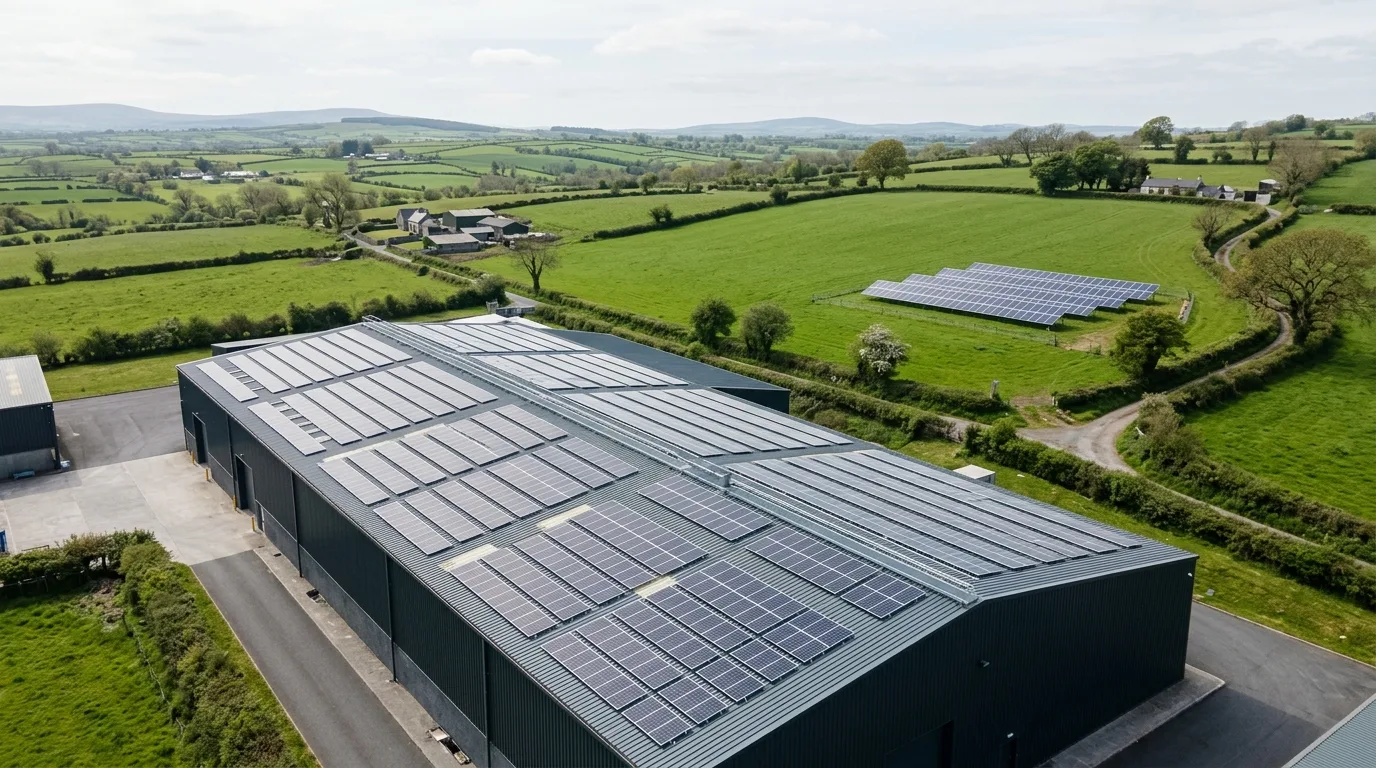
The enhanced Non-Domestic Microgen Grant (NDMG) is one of the more open SEAI schemes — there is no BER requirement and no minimum business size. But a handful of rules in the Terms and Conditions decide eligibility outright. Work through this checklist before you spend money on surveys.
1. You are a business, farm, public body or non-profit
The grant is available to businesses, the agricultural sector, public sector bodies, schools, community centres and non-profit societies. The applicant is the owner of the business or the authorised signatory of the organisation.
2. The premises is in the Republic of Ireland and old enough
The building must be located in the Republic of Ireland. SEAI's current Terms and Conditions require it to have been built (and, per the Application Guide, occupied) on or before 31 December 2024. Older versions of the scheme documents used a pre-2021 cut-off, so if you are on the boundary, confirm in the application portal.
3. You have an MPRN — and it hasn't had a grant-funded system before
- One solar PV system per MPRN can be supported.
- A domestic MPRN can qualify if the electrical infrastructure behind it supplies a registered business — common on farms and in live-above-the-shop premises.
- No previous SEAI solar support for the installation under another scheme, such as Better Energy Communities, the domestic Solar PV grant, EXEED or the Micro-generation Trial.
4. No other State grant on the same installation
This is the rule that most often catches people out. You cannot cumulate aid from the NDMG with any other grant from any Irish Government department or State agency, and the installation must not have been incentivised under any other grant scheme. The 45% ceiling is assessed across all State funding combined. If you are a farmer weighing TAMS against the NDMG, read our farm comparison.
5. The system is for self-consumption
The site must have electricity demand. The scheme supports systems sized for on-site use; it does not fund grid-connected renewable generation for export only. Off-grid sites can also be supported.
6. Size: up to 1,000 kWp funded
Grant funding applies to systems up to 1,000 kWp. Larger systems can apply but receive the maximum €325,200 for the first 1,000 kWp.
7. Your company and installer are SEAI-registered
You must use a company on SEAI's Registered Non-Domestic Microgen (Solar PV) Companies list, which in turn uses an installer on the registered installers list — both active at the time of the works. All electrical work must be done by a Safe Electric Ireland registered electrician and certified with a Safe Electric Certificate 3.
8. You will wait for approval before spending
Grant approval must be in place before you purchase materials or start any measure. This is not a technicality — costs incurred before approval are ineligible and can lead to the entire grant being withdrawn.
9. Your business is not an "undertaking in difficulty"
Because the grant is State aid under the EU General Block Exemption Regulation, the applicant must not be an "undertaking in difficulty" as defined in GBER, and must have sufficient financial resources to pay for the works (the grant is paid after completion).
10. You can get tax clearance
If you will receive more than €10,000 in public grants or subsidies in a calendar year, you need a valid Tax Clearance Certificate, and you must keep it current until the grant is paid.
11. You have the right consents
You must obtain all necessary consents, permissions and statutory approvals and have the authority to install on the premises. Many rooftop systems on non-domestic buildings are exempt from planning permission under the 2022 exempted development regulations, subject to conditions — but checking is your responsibility, not SEAI's.
Tenants: you can apply if you don't own the building, but you are responsible for the landlord's consent and for arranging access for any SEAI inspection.
12. Things you do NOT need
- No BER. You don't need an existing Building Energy Rating or a new one after the works.
- No minimum turnover or headcount. Sole traders, SMEs and large companies all qualify.
- No energy audit. (Although SEAI's separate SME energy audit voucher can help you size the system.)
Quick self-check
| Question | Needed answer |
|---|---|
| Business, farm, public body, school, community centre or non-profit? | Yes |
| Built and occupied on or before 31 Dec 2024, in the Republic of Ireland? | Yes |
| Any SEAI or other State grant already on this installation? | No |
| Sized mainly for on-site use? | Yes |
| SEAI-registered company and installer? | Yes |
| Works or purchases started before the letter of offer? | No |
If you ticked every box, you are very likely eligible — the next step is quotes.
Get 3 free quotes from SEAI-registered installers — free and no obligation.
Frequently asked questions
Do I need a BER to qualify for the SEAI business solar grant?
No. SEAI's Application Guide says applicants are not required to have an existing BER certificate or to complete one after the works.
Can a farm with a domestic electricity meter apply?
Yes, potentially. SEAI allows an NDMG application on a domestic MPRN where the associated electrical infrastructure supplies a registered business. Only one system per MPRN is supported.
Can I combine the NDMG with another grant like TAMS or EXEED?
Not on the same installation. The NDMG cannot be cumulated with any other Irish Government or State agency grant, and installations previously supported by another SEAI solar scheme are ineligible.
Can I get the grant if I rent my business premises?
The scheme anticipates applicants who are not the building owner. You must obtain the landlord's consent and any approvals, and you are responsible for arranging access for inspections.
Is there a size limit for the business solar grant?
Grant funding applies to systems up to 1,000 kWp. Larger systems can apply but receive the maximum €325,200 for the first 1,000 kWp.