Heat Pump Troubleshooting Ireland: Common Problems and How to Fix Them
Most heat pump problems have simple explanations — and many can be resolved without an engineer visit. This guide covers the most common heat pump faults in Irish homes, what they mean, what you can check yourself, and when it is time to call a professional.
By Smart Solar Editorial · Updated 15 May 2026 · 10 min read
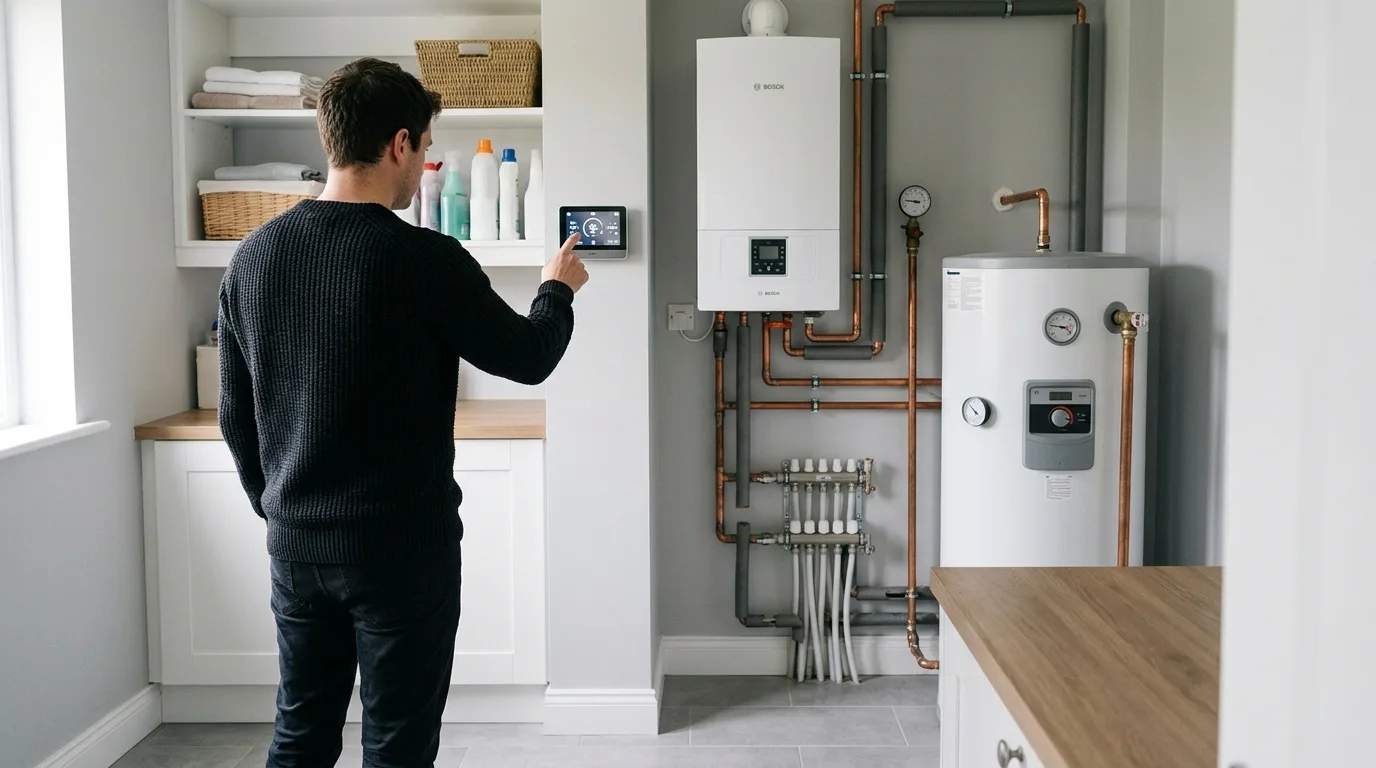
Heat pumps are robust, reliable systems — but they are also complex, and when something goes wrong it can be hard to know whether you are dealing with a minor issue you can resolve yourself or a serious problem requiring an engineer. The good news: the most common heat pump problems in Irish homes have identifiable symptoms and, often, straightforward solutions.
This guide works through the most frequent heat pump complaints from Irish homeowners, with diagnostic steps and clear guidance on when to call a professional.
Problem 1: The House Is Not Reaching the Set Temperature
This is the most common complaint, particularly in the first winter after installation, and it has several possible causes ranging from settings issues to genuine system problems.
Check 1: Weather compensation curve settings
Heat pumps using weather compensation adjust their flow temperature automatically based on outdoor temperature. If the compensation curve is set too conservatively, the system may not produce enough heat during very cold weather (below 5°C in Ireland, which occurs on approximately 30–50 days per year in most counties).
On most controllers (Daikin BRC302, Mitsubishi MELCloud, Samsung MIM-H04), you can view the weather compensation curve settings. The curve defines the flow temperature at different outdoor temperatures — for example, 35°C flow at 7°C outdoors, rising to 45°C at -3°C outdoors. If the maximum flow temperature in the curve is set too low, the system will not compensate adequately in cold weather.
Action: Check the weather compensation curve on your controller or app. If you are unsure how to interpret or adjust it, contact your installer — this is a commissioning adjustment, not a repair, and should be covered by the installer's workmanship warranty.
Check 2: Has a room thermostat or zone valve closed off part of the system?
Many Irish homes have zone valves (motorised valves) controlling separate heating zones — typically upstairs and downstairs. If a zone valve has stuck closed, that zone receives no heat even though the heat pump is running normally.
Action: Check that all zone valves are operating. On a two-zone system, feel the pipe on both sides of each zone valve when the heating is running — if one side is hot and the other cool, the valve may be stuck.
Check 3: Are individual radiator valves (TRVs) open?
Thermostatic radiator valves (TRVs) fitted to individual radiators close automatically when a room reaches its set temperature. If TRVs are stuck closed (a common issue with older TRVs or TRVs that were closed during installation and never fully opened), some radiators will remain cold.
Action: Turn each TRV fully open by hand and check whether the radiator warms up. If a TRV appears stuck, it may need replacing — typically a €20–€40 part that any plumber can fit.
Check 4: Are radiators sized correctly for heat pump flow temperatures?
Heat pumps typically run at flow temperatures of 35–50°C, compared to 70–80°C for an oil boiler. If your existing radiators were sized for a high-temperature boiler, they may not emit enough heat at the lower flow temperatures a heat pump uses. This is a design issue, not a fault — the solution is radiator upgrades, not adjusting settings.
Indicator: If the heat pump is running continuously at full output in cold weather but rooms are cool, and your radiators feel only lukewarm (35–45°C) rather than hot, you may need radiator upgrades.
Action: Contact your installer. If a proper heat loss calculation and radiator assessment was carried out before installation, undersized radiators should have been identified and included in the upgrade scope. If they were not, this is a legitimate complaint under the installer's workmanship warranty.
Problem 2: Heat Pump Displaying a Fault Code
Modern heat pumps (Daikin, Mitsubishi, Samsung, Grant) display fault codes on the controller when they detect an error. The code tells you — and your engineer — exactly what the system has detected.
Interpreting fault codes
Each manufacturer uses a different coding system. Common categories:
Communication errors (e.g., Daikin "U2", Mitsubishi "6602"): The outdoor unit and indoor unit are not communicating correctly. Causes include: loose wiring connection, a damaged cable (rodent damage is surprisingly common in Irish outhouses and utility rooms), or a failed control board.
High or low pressure faults (e.g., Daikin "E1", Mitsubishi "P1/P6"): The refrigerant circuit is operating outside normal pressure limits. Causes include: low refrigerant charge (leak), blocked coil (reduced airflow), or a failing expansion valve.
Temperature sensor faults: A temperature sensor has failed or is reading outside its expected range. These are often straightforward component replacements.
Defrost faults: The defrost cycle has not completed within the expected timeframe, typically because of unusual icing caused by very cold weather combined with high humidity.
What to do with a fault code
Step 1: Note the exact code shown on the display.
Step 2: Check your heat pump manual or the manufacturer's online fault code guide for the specific code. Many codes are documented publicly.
Step 3: Try a power reset. Turn the heat pump off at the isolator switch (outdoor unit and indoor unit), wait 2 minutes, and restart. Many transient faults (e.g., brief communication dropouts) clear on restart.
Step 4: If the fault returns immediately or within a few hours, contact your service engineer with the exact code. Do not repeatedly restart the system if a pressure fault code is showing — this can damage the compressor.
Problem 3: Outdoor Unit Is Covered in Ice
The outdoor unit of an air source heat pump regularly frosts up during cold, damp Irish weather — this is completely normal. The heat pump's defrost cycle automatically melts this frost, and you may see steam rising from the unit during defrost. This is normal.
Abnormal icing: The outdoor unit should not remain completely encased in ice for hours at a time. If you see solid ice on the unit during weather above -5°C, particularly ice covering the top fan grille or sides of the casing (not just the coil), the defrost cycle may not be functioning correctly.
Causes of defrost failure:
- Defrost sensor fault (temperature sensor used to trigger defrost has failed)
- Defrost timer or logic fault
- Low refrigerant charge causing abnormal operating conditions
Action: If the outdoor unit remains iced over for more than 2 hours during normal winter weather (above -5°C) and the defrost cycle does not appear to be running, turn off the system and contact your service engineer.
What not to do: Do not pour boiling or very hot water on a frozen heat pump — thermal shock can crack the coil fins. If necessary, use cool water or allow the unit to defrost naturally with the system off.
Problem 4: Hot Water Not Hot Enough
Cold or lukewarm hot water from a heat pump system has several causes.
Check 1: Cylinder temperature settings
The target temperature for the hot water cylinder is typically set between 45°C and 55°C for heat pump operation (lower than the 60–65°C used with a boiler). If the cylinder thermostat has been set too low, water will be tepid. Check the target temperature in your controller settings.
Check 2: Time scheduling
Heat pump hot water is typically heated during a scheduled window, often set to coincide with off-peak electricity hours (11pm–8am on most Irish night-rate tariffs). If you are trying to access hot water outside the heating window and the cylinder has not been well-insulated, it may have cooled.
Action: Check that the scheduled hot water heating window is correctly set for your usage pattern. A family with children needing morning showers should ensure the hot water cycle completes before 7am, not at 8am when the night rate ends.
Check 3: Cylinder size
If the hot water consistently runs out during normal morning use, the cylinder may be undersized for your household. A 3-bed home with 4 occupants typically needs a minimum 200-litre cylinder; 5+ occupants, 250 litres or more.
Check 4: Anti-scalding mixer valve
Many cylinders are fitted with a thermostatic mixing valve (TMV) at the outlet that blends cold water into the hot supply to prevent scalding. If this valve is set too conservatively, the delivered temperature may be much lower than the stored temperature. The valve is typically adjustable — consult your plumber.
Check 5: Legionella cycle interference
If the Legionella prevention cycle (weekly heating to 60°C) runs overnight and consumes stored heat, you may find the first morning of the cycle has better hot water performance than subsequent mornings. This is typically a scheduling optimisation — arrange the Legionella cycle on a specific night that suits your pattern.
Problem 5: Heat Pump Appears to Be Running All the Time
Heat pumps are designed to run for long periods at low output — this is their normal, efficient operating mode. A heat pump that runs for 8, 12, or even 18 hours per day in cold Irish winter weather is working correctly. This is very different from a gas boiler, which fires briefly to high output and then switches off.
Abnormal continuous running:
- The heat pump runs continuously but rooms do not reach the set temperature (possible undersized radiators, too-conservative weather compensation curve, or low refrigerant)
- The heat pump runs continuously even in mild weather (above 12°C outdoors) — possible control fault, thermostat fault, or the minimum run time setting is excessively long
Action: If your heat pump is running continuously in mild weather (spring or autumn, 10–15°C outdoors), check whether the heating is still scheduled to run, whether any zone valves are stuck open, and whether any room thermostat is positioned near a cold draught. If these are normal, consult your engineer.
Problem 6: Electricity Bills Higher Than Expected
High electricity bills from a heat pump are one of the most common complaints, and the cause is almost always in one of three areas: settings, tariff, or system design.
Tariff
Are you on a heat pump-optimised tariff with a night rate? If you are paying standard flat-rate electricity (29–32c/kWh in 2026), your running costs will be significantly higher than a homeowner on a night rate (13–16c/kWh). Switching to a night-rate tariff from Electric Ireland, Energia, Bord Gáis Energy, or SSE Airtricity can reduce heat pump electricity costs by 40–50%.
Action: Contact your electricity provider and switch to their night-rate or smart tariff. Ensure your ESB Networks smart meter is activated for time-of-use billing.
Scheduling
Even on a night-rate tariff, high bills can result from the heat pump running primarily during day-rate hours. Check your controller scheduling and ensure the bulk of heating and hot water production occurs between 11pm and 8am (the typical night-rate window).
Weather compensation settings
A heat pump running at unnecessarily high flow temperatures (e.g., 55°C when 40°C would suffice for the current weather) uses more electricity. Each 1°C reduction in average flow temperature improves SCOP by approximately 2–3%. Review weather compensation settings with your installer.
Refrigerant charge
A heat pump with a slow refrigerant leak will gradually lose efficiency — consuming more electricity to produce the same heat. If bills have increased gradually over 6–12 months without a change in weather, usage, or tariff, a refrigerant check is warranted.
Problem 7: Unusual Noise From the Heat Pump
Heat pumps make noise — fan noise, compressor hum, refrigerant flow sounds, and water pump noise are all normal. Learn what your system sounds like when running well. New noises that develop over time indicate a developing problem.
| Noise | Likely Cause | Action |
|---|---|---|
| Rattling from outdoor unit | Loose panel screw or debris inside casing | Check screws; call engineer if inside casing |
| High-pitched hissing | Possible refrigerant leak | Call engineer immediately |
| Vibration transmitted to wall | Anti-vibration mounts deteriorated | Engineer to replace mounts |
| Gurgling in pipes | Air in hydraulic circuit | Engineer to bleed circuit |
| Clicking at start/stop | Normal — expansion/contraction of pipework | No action needed |
| Loud bang on startup | Possible hydraulic shock ("water hammer") | Engineer to check expansion vessel and pump speed |
When to Call Your Engineer vs. DIY
| Symptom | DIY possible | Call engineer |
|---|---|---|
| Fault code — clears on restart | Yes — try restart once | Yes — if fault returns |
| Pressure gauge below 1 bar | Check if it drops further | Yes — if pressure loss is repeated |
| Radiator cold — TRV stuck | Yes — open TRV manually | Yes — if TRV is seized |
| Hot water scheduling issue | Yes — adjust controller | No |
| Refrigerant leak suspected | No | Immediately |
| Outdoor unit iced over >2 hours | No | Same day |
| Error code indicating pressure fault | Power off — do not restart | Immediately |
| System running but no heat output | Check zone valves, TRVs | Yes — if checks clear |
Keeping a Fault Log
If your heat pump develops recurring issues, keep a simple log: date, symptom, fault code (if any), weather conditions, and action taken. This information is invaluable for your service engineer and may be required for a warranty claim. The manufacturer app (Daikin Onecta, Mitsubishi MELCloud, Samsung SmartThings) typically retains error code history — check whether your app shows previous fault events.
Get 3 free heat pump quotes — free and no obligation.
Frequently asked questions
Why is my heat pump not heating the house in cold weather?
The most common causes are: weather compensation curve set too conservatively (the system is not increasing flow temperature sufficiently as outdoor temperature drops), undersized radiators for heat pump flow temperatures, a zone valve or TRV stuck closed, or low refrigerant charge. Check the controller settings first; if the system is running at full output but rooms are still cold, contact your installer — this is likely a design or commissioning issue.
What does it mean if my heat pump has ice on the outdoor unit?
Light frosting on the outdoor unit coil during cold, damp weather is completely normal — the heat pump's automatic defrost cycle melts this ice periodically, producing visible steam. Abnormal icing is when the unit remains solidly encased in ice for more than 2 hours during weather above -5°C, which indicates a defrost cycle fault. Turn off the system and contact your engineer.
Why are my electricity bills higher than my installer predicted?
The most common causes are: wrong electricity tariff (not on a heat pump night-rate plan), heating or hot water scheduled during peak-rate hours, weather compensation flow temperature set too high, or a developing refrigerant leak reducing efficiency. Start by checking your tariff — switching to a night-rate plan from Electric Ireland, Energia, Bord Gáis, or SSE Airtricity can reduce bills by 40–50%.
How do I reset a heat pump fault code in Ireland?
Turn the heat pump off at the isolator switch (both outdoor and indoor units if separate), wait 2 minutes, and restart. Many transient faults (communication dropouts, temperature sensor glitches) clear on restart. If the fault code returns within a few hours, do not keep restarting — note the exact code and contact your service engineer. For pressure fault codes, switch off and do not restart until an engineer has investigated.
Is it normal for a heat pump to run all day in Ireland?
Yes. Heat pumps are designed for long, low-intensity running periods — this is their efficient operating mode. During Irish winter weather (0–8°C), a heat pump may run for 12–18 hours per day continuously, which is completely normal. Unlike a gas boiler that fires briefly at high output, a heat pump operates best at sustained low output. Running all day in mild weather (above 12°C) when no heating should be needed may indicate a control or scheduling issue.
Sources & further reading
- SEAI Heat Pump Consumer Information — Sustainable Energy Authority of Ireland
- ESB Networks Smart Metering — ESB Networks