DS3 Grid Services Revenue from BESS: Real Irish Numbers in 2026
EirGrid pays for fast frequency response, operating reserve and other ancillary services. A 1 MW BESS via an Irish DS3 aggregator typically earns €30k-€60k per MW per year - here is the breakdown.
By Smart Solar Editorial · Updated 15 May 2026 · 9 min read
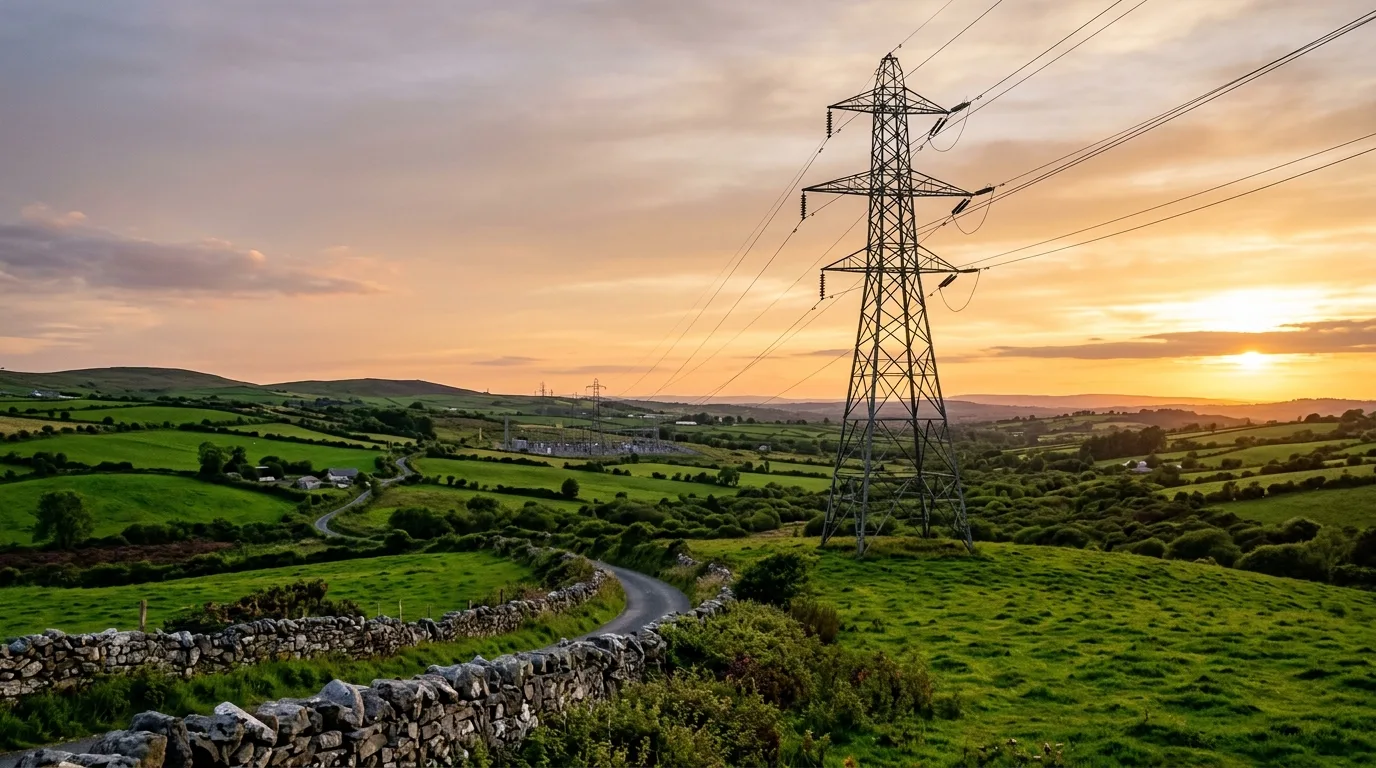
EirGrid's DS3 system services market is one of the most active grid services markets in Europe, designed to keep the Irish grid stable as wind penetration regularly exceeds 70% of demand. Commercial batteries are exceptionally well-suited to DS3 because they can ramp from zero to full power in under 150 milliseconds - faster than any conventional generator.
For an Irish business considering BESS, DS3 can add €30k-€80k per MW per year on top of behind-the-meter savings. Here is how the revenue actually works in 2026.
What DS3 actually pays for
EirGrid procures 14 distinct system services under DS3. The ones that commercial BESS typically supplies are:
- FFR - Fast Frequency Response (response within 2 seconds, full for 8 seconds)
- POR - Primary Operating Reserve (response within 5 seconds, full for up to 15 seconds)
- SOR - Secondary Operating Reserve (15-90 seconds)
- TOR1 - Tertiary Operating Reserve 1 (90 seconds to 5 minutes)
- TOR2 - Tertiary Operating Reserve 2 (5-20 minutes)
- RRD - Ramping Margin 1 Hour, 3 Hour, 8 Hour
- DRR - Dynamic Reactive Response
- SIR - Synchronous Inertial Response (synchronous machines only - not BESS)
A typical Irish BESS contracted through an aggregator will be paid for FFR, POR, SOR and TOR1 simultaneously - one battery, multiple revenue streams stacked.
How aggregators monetise DS3
Few commercial BESS owners in Ireland bid directly into DS3. The minimum portfolio size, telemetry requirements, and 24/7 dispatch complexity make direct participation impractical below 10-20 MW. Instead, owners contract with a DS3 aggregator that pools many small batteries into a virtual power plant and handles all market interaction.
Key DS3 aggregators active in Ireland in 2026:
- Statkraft - Norwegian state utility, large Irish portfolio
- Veri (formerly Veridian / VPP Energy) - Dublin-based
- GridBeyond - Irish-headquartered, large industrial focus
- Power Capital Renewable Energy - growing aggregator role
- Energia / Mercury Engineering - integrated developer-aggregator
Aggregator fees typically range from 15% to 25% of gross DS3 revenue, with the higher band associated with full-service contracts including telemetry, dispatch optimisation, EirGrid settlement and audit support.
Realistic 2026 DS3 revenue per MW
DS3 prices are set through annual tariff windows and Fixed Contracts (multi-year). Headline 2026 numbers, blended across the four most common services for a fully-available 1 MW battery:
| Service | Annual gross per MW (2026) | Notes |
|---|---|---|
| FFR | €20,000 - €38,000 | Highest paying for fast assets |
| POR | €8,000 - €14,000 | Often stacked with FFR |
| SOR | €5,000 - €10,000 | Stackable |
| TOR1 | €4,000 - €8,000 | Stackable |
| Stacked gross total | €37,000 - €70,000 | Fully available 1 MW battery |
| Less aggregator fee 20% | -€7,400 - €14,000 | |
| Net DS3 to owner | €29,600 - €56,000 | Per MW per year |
For a 2 MW system the numbers double. For a 0.5 MW system halve them. These are realistic blended numbers - some quarters earn more, some less, depending on system tightness and tariff scalars.
How sizing for DS3 differs from peak shaving
DS3 contracts pay for capacity availability, not energy throughput. The PCS power rating (kW) is what gets paid. The cell capacity (kWh) only needs to be enough to support the longest expected reserve event plus state-of-charge management.
For FFR and POR, EirGrid effectively needs the battery to respond hard for 8-15 seconds. Sizing rules of thumb:
- FFR + POR + SOR stacking: minimum 15-minute duration (0.25 hour)
- TOR1 added: 30 minutes duration
- TOR2 added: 60 minutes duration
- Full DS3 stack with conservative SOC management: 90 minutes to 2 hours
Most 2026 Irish behind-the-meter BESS providing DS3 alongside peak shaving end up at 1-2 hour durations - which serves both jobs.
Behind-the-meter vs front-of-meter DS3
Two business models exist:
1. Behind-the-meter (BTM). The battery sits on a customer site (factory, data centre) and provides MIC reduction + DS3 simultaneously. The site host owns the asset, the aggregator manages DS3. EirGrid pays the aggregator who passes through a share. This is by far the most common 2026 model for commercial BESS in Ireland.
2. Front-of-meter (FTM). Standalone BESS connected directly to the grid (often co-located with wind or solar). Pure-play revenue model: DS3 + I-SEM energy arbitrage + capacity market. Examples include Lumcloon Energy in Offaly, Statkraft Kelwin-2 in Mayo, and ESB Inchicore in Dublin.
Stacking DS3 with other revenue streams
Behind-the-meter Irish commercial BESS typically combine DS3 with:
- MIC reduction (the largest single stream on most sites)
- Time-of-use arbitrage during DS3-idle periods
- Solar self-consumption if PV is co-located
- CEG export of stored solar surplus at peak grid prices
The EMS arbitrates between revenue streams in real time, typically prioritising MIC limit defence (you cannot afford to breach MIC even for a DS3 event) and then maximising the next-best opportunity.
The contract terms that matter
When evaluating a DS3 aggregator contract, focus on:
- Aggregator fee structure - percentage of gross, or fixed monthly?
- Availability target - typically 95%+ for full contract payment
- Notice period - how can you exit the contract?
- Settlement transparency - do you get raw EirGrid settlement data?
- Cycle wear allowance - who covers throughput-related warranty impact?
- PCS sizing requirement - is the aggregator forcing oversized inverter capex?
- Telemetry installation cost - included or extra?
- Compliance and testing - who pays for EirGrid qualification trials?
A well-structured 5-year contract from a top-tier aggregator on a 1 MW BESS will spell out expected revenue, performance penalties, and exit clauses in 20-30 pages. Expect detailed dispute resolution language given the size of the cashflows.
What can go wrong
DS3 revenue is not guaranteed. Realistic risk factors include:
- Tariff scalar movements. EirGrid adjusts payment scalars annually; FFR rates have varied by ±15% year on year.
- Saturation. As more batteries enter, individual contract prices may compress. EirGrid mitigates this through tariff Volume Scalars.
- Performance penalties. Failing the EirGrid 5% accuracy band triggers penalty payments to the aggregator.
- Forced derating in summer. High ambient temperatures in container BESS without adequate HVAC can derate output and reduce settlement.
- Connection-side limits. ESB Networks NC6/NC7 constraints can cap DS3 export, especially on weak rural feeders.
When DS3 makes sense
A simple heuristic: if your BESS is sized above 500 kW PCS and you have a credible aggregator partner, DS3 will add 20-50% to total project IRR. Below 250 kW, the aggregator fees and qualification costs typically erode net returns to marginal levels - though smaller systems can still participate via aggregator pools.
The combination of MIC reduction + arbitrage + DS3 is what gets most Irish commercial BESS projects to a 4-6 year payback in 2026, and DS3 specifically is what often takes a marginal project to a strong one.
Get 3 free commercial battery quotes — free and no obligation.
Frequently asked questions
How much DS3 revenue can a 1 MW battery earn in Ireland?
In 2026, a fully-available 1 MW BESS contracted through an aggregator typically earns €29k-€56k net per year from DS3 services (FFR, POR, SOR, TOR1 stacked) after aggregator fees of 15-25%.
Do I need a special licence to provide DS3 services?
Not as the asset owner if you work through an aggregator. The aggregator (Statkraft, Veri, GridBeyond, etc.) handles EirGrid qualification, registration, dispatch, settlement and compliance. You sign a service contract and receive monthly settlement statements.
What is the minimum BESS size for DS3 participation?
Aggregator portfolios accept assets from 100 kW and up. Practical economics typically require 500 kW or more for meaningful net returns after aggregator fees and qualification costs. Below 250 kW, MIC reduction and arbitrage are usually the only meaningful revenue streams.
Can a battery do DS3 and peak shaving at the same time?
Yes - this is the standard 2026 model for behind-the-meter BESS in Ireland. The EMS prioritises MIC defence (peak shaving) and uses spare PCS capacity and SOC headroom for DS3 contracted services. Stacking typically lifts total project revenue by 30-50%.
How does DS3 affect battery warranty?
DS3 throughput is usually within warranty limits if the system is sized correctly (1C continuous LFP cells, 0.5-1C operational duty). Aggregator contracts often include a cycle wear clause defining the maximum equivalent full cycles per year, typically 350-500.
Sources & further reading
- EirGrid DS3 System Services Overview — EirGrid
- EirGrid DS3 Tariff Schedule — EirGrid
- CRU System Services Decisions — Commission for Regulation of Utilities