Climate Action Fund and Battery Storage: Funding Routes for Large Irish BESS Projects
For BESS projects above the EXEED cap of €3M, the Climate Action Fund and related schemes back larger strategic deployments. Here is how to navigate them in 2026.
By Smart Solar Editorial · Updated 15 May 2026 · 8 min read
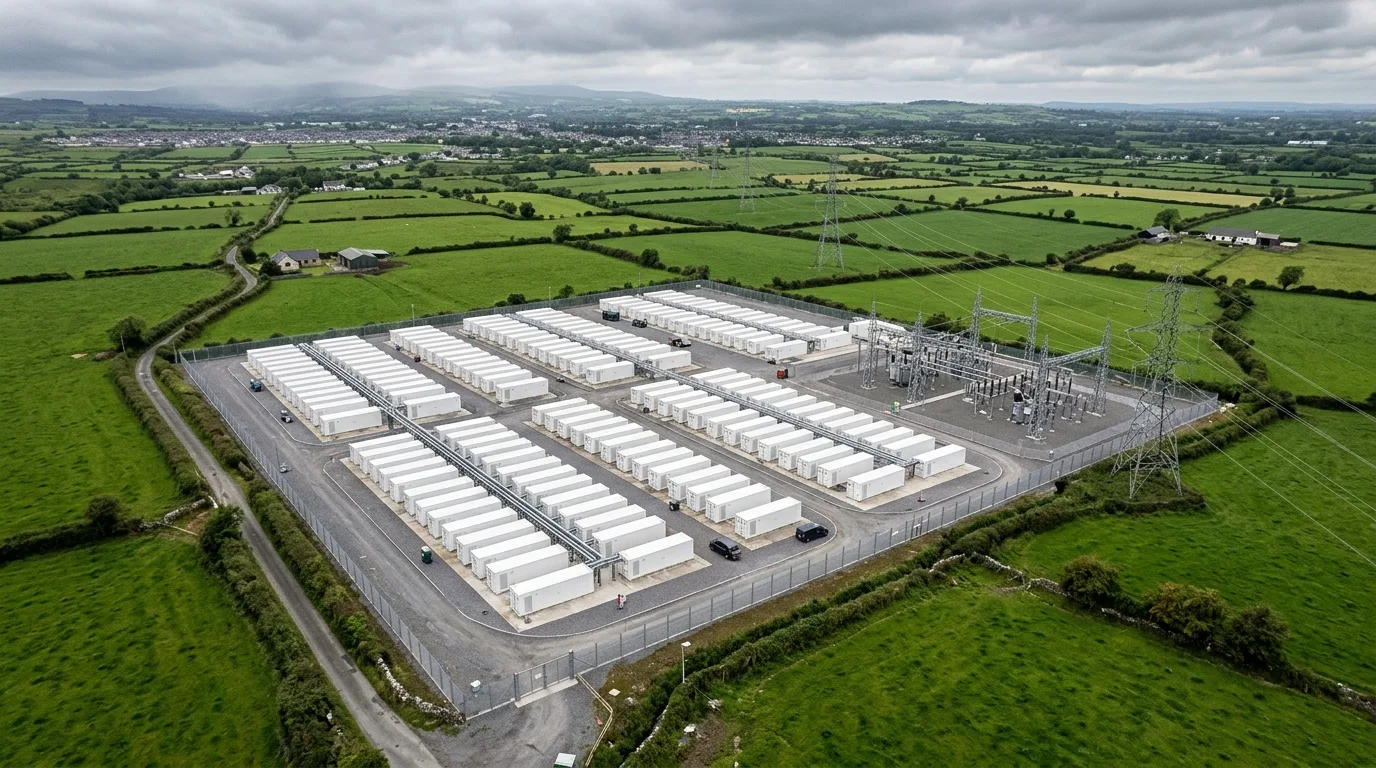
The Climate Action Fund (CAF) is the Government of Ireland's flagship climate finance vehicle, operated by the Department of the Environment, Climate and Communications (DECC). Unlike SEAI's EXEED scheme, which suits projects under €10M total capex, the Climate Action Fund underwrites large strategic projects - typically €5M to €100M+ - including grid-scale BESS, transmission upgrades, district heating and major industrial decarbonisation. For 100+ MWh battery projects or BESS combined with renewable hybrid systems, CAF is often the relevant funding route.
What the Climate Action Fund is
The CAF was established in 2018 to support projects contributing to Ireland's Climate Action Plan targets. It is funded from the National Oil Reserves Agency Levy (NORA) and other ringfenced carbon-related revenue streams. To date, CAF has committed over €700M across multiple rounds, with €500M+ specifically allocated to projects in the 2024-2028 window.
CAF is not a continuous open scheme - it operates in competitive calls announced periodically. Recent and current calls have included:
- Strategic Banking Corporation of Ireland (SBCI) Climate Action Loan Schemes
- District Heating Project Funding
- Hydrogen Production Pilots
- Industrial Decarbonisation Projects
- Renewable Heat (commercial)
- Storage and Flexibility (relevant to BESS)
Calls are time-limited - typical application windows run 8-16 weeks, followed by evaluation periods of 12-20 weeks.
Where BESS fits in the CAF landscape
Large-scale BESS projects can access CAF support through:
1. Standalone storage and flexibility call. When announced, this supports projects that add storage capability to the Irish grid - typically grid-connected BESS above 10 MW or behind-the-meter aggregated portfolios at scale.
2. Industrial decarbonisation projects. Major manufacturers (Diageo, Glanbia, Aughinish Alumina, Irish Cement, Aurivo, Tirlán) can integrate BESS into broader decarbonisation cases including process electrification, on-site renewables, and hydrogen.
3. Hybrid renewable projects. BESS co-located with wind or solar farms to firm output, smooth ramps, and support grid services. Recent CAF support has gone to several wind+storage hybrid developments in the Midlands and West.
4. District heating and infrastructure projects. Less common for BESS but possible where the battery supports a thermal storage and electrification combination.
Grant rates and structure
CAF grant rates vary by call but typically range:
- 40-50% of eligible capex for projects with strong strategic value
- Co-financing requirement - applicants must commit own funds (typically 50-60%)
- State Aid compliance - rates capped by EU GBER (General Block Exemption Regulation) limits
For a €20M grid-scale BESS project, a typical CAF grant might be €6-8M, with the balance financed through equity and debt.
CAF vs EXEED - when each applies
A simple decision rule:
- Project capex under €3M: EXEED (up to €3M grant)
- Project capex €3-10M: Compare EXEED at the cap vs CAF eligibility
- Project capex €10M+: CAF typically the main route
- Standalone grid-scale BESS: CAF only - EXEED requires integrated efficiency case
EXEED is open continuously; CAF is by competitive call. Project timing and strategic positioning often dictate which to pursue first.
Application process
CAF applications are substantially more involved than EXEED. Typical requirements:
- Detailed project plan, engineering design and capex schedule
- Detailed financial model showing co-financing and returns
- Strategic case linking to Climate Action Plan targets
- Carbon abatement calculation in tonnes CO2 per €1 of grant
- Environmental impact and planning status
- Risk register and mitigation plan
- Project management and governance structure
- Letters of support from relevant stakeholders (ESB Networks, EirGrid, local authority, anchor offtakers)
- Compliance with public procurement (if applicable)
The application package typically runs to 200-400 pages and requires 4-8 weeks of consultant-supported preparation.
Recent CAF-supported BESS-relevant awards
Public records show recent CAF support for:
- District heating networks in Dublin (Tallaght, Citywest, North Dublin) - some include BESS for backup
- Decarbonisation projects at major Irish industrial sites (cement, food processing, distillation)
- Renewable hybrid pilots combining wind, solar and storage in the Midlands
- Hydrogen pilot projects with co-located BESS for renewable energy buffering
- Strategic transmission and storage projects supporting EirGrid system stability
Specific BESS-only awards have been smaller than European peers (UK, Germany) - Ireland's grid storage support has historically come more through DS3 revenue than capex grant, with CAF supporting integrated rather than standalone projects.
Other relevant DECC and EU funding routes
Beyond CAF, large Irish BESS projects may access:
- Modernisation Fund - EU-funded scheme for energy infrastructure including storage
- Innovation Fund - EU support for innovative low-carbon technologies
- Connecting Europe Facility Energy (CEF-E) - cross-border infrastructure projects
- Just Transition Fund (Midlands) - region-specific transition support, includes energy projects
- European Investment Bank (EIB) Green Investment Facility - debt financing at preferential terms
- Strategic Banking Corporation of Ireland (SBCI) Energy Efficiency Loan Scheme - debt with state guarantee
These are typically used in combination - a 30 MW BESS project might combine CAF grant, EIB debt, equity from a developer, and DS3 / capacity market revenue contracts.
Worked example: 25 MW / 50 MWh grid-scale BESS in the Midlands
A hypothetical Midlands BESS project funded under CAF and stacked finance:
- Gross capex: €27.5M (€550/kWh installed at scale)
- CAF grant 30%: -€8.25M
- EIB green loan 50%: €9.6M
- Equity: €9.6M
- Net cost basis for revenue modelling: €27.5M total
- Annual revenue: DS3 (€60k/MW × 25) + capacity market (€48k/MW × 25) + arbitrage = €3.4M
- Equity IRR: 15-18% over 15 years
The CAF grant is what makes the unleveraged returns attractive enough to commit equity, which in turn unlocks EIB debt.
How to engage with CAF
For BESS developers and large industrial users considering CAF support:
- Subscribe to DECC and gov.ie notifications for new calls
- Engage an experienced grants advisor with public sector funding track record
- Begin developing the project to investment-grade design before a call opens
- Build stakeholder support (anchor offtakers, planning, local authority)
- Have co-financing lined up (equity and debt) so the application is credible
- Model carbon abatement and economic impact carefully - these drive scoring
Bottom line
The Climate Action Fund supports large strategic Irish BESS projects above the EXEED cap, typically 10 MW+ standalone batteries or BESS within major industrial decarbonisation cases. Grants of 30-50% of capex are achievable for strong applications. The process is competitive, structured, and rewards projects that demonstrate strong climate impact alongside commercial viability.
Get 3 free commercial battery quotes — free and no obligation.
Frequently asked questions
Can I apply to the Climate Action Fund for a battery project in Ireland?
Yes, for large strategic BESS projects typically above €5-10M total capex. Smaller projects are better suited to SEAI's EXEED scheme. CAF operates through periodic competitive calls rather than a continuous open application.
How big should my BESS project be to qualify for CAF?
Typically 10 MW+ standalone grid-scale BESS, or BESS embedded in a larger industrial decarbonisation or renewable hybrid project of €10M+ total capex. Behind-the-meter sites under 5 MW are usually better served by EXEED.
What grant rates does the Climate Action Fund offer?
Typically 30-50% of eligible capex, with co-financing required from applicants. Exact rates depend on the call structure, EU State Aid limits, and the project's strategic value to Ireland's Climate Action Plan targets.
Can I combine CAF with EXEED, ACA and DS3 revenue?
EXEED and CAF cannot fund the same capex (no double-counting). ACA tax relief and DS3 revenue stack on top of either grant. Large projects often use CAF grant + EIB debt + equity + DS3 revenue + ACA in combination.
How long is the Climate Action Fund application process?
Typically 6-12 months from call open to grant award decision, with implementation timelines of 24-48 months thereafter for delivery. Applicants should have investment-grade design and stakeholder support in place before a call opens.
Sources & further reading
- Climate Action Fund Overview — Government of Ireland (DECC)
- Strategic Banking Corporation of Ireland — SBCI
- European Investment Bank Ireland Projects — European Investment Bank