Accelerated Capital Allowance (ACA) for Battery Storage in Ireland
ACA lets profitable Irish companies write off the full cost of a commercial BESS against corporation tax in year one. Worth 12.5% of capex on top of any grants - here is how it works.
By Smart Solar Editorial · Updated 15 May 2026 · 8 min read
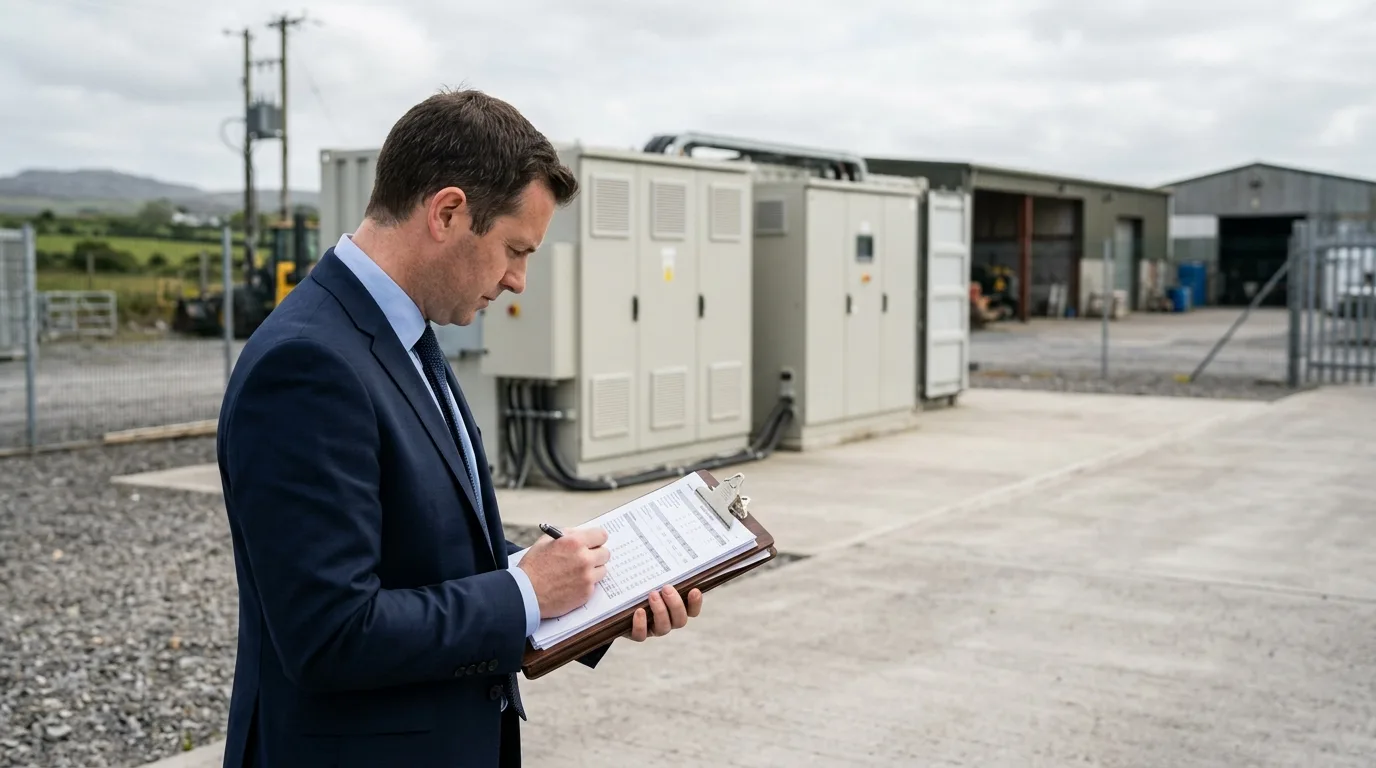
The Accelerated Capital Allowance (ACA) is one of the simplest and most overlooked tax reliefs available to Irish businesses investing in commercial battery storage. Under the scheme, eligible energy-efficient equipment can be written off against corporation tax at 100% in the year of purchase, rather than the standard 12.5% per year over 8 years. For a profitable Irish company, this delivers a meaningful first-year cashflow benefit on top of any EXEED or Climate Action Fund grants.
What ACA is and how it works
In standard Irish capital allowances, plant and machinery is written down at 12.5% per year over 8 years (the "wear and tear" allowance). The ACA scheme accelerates this for qualifying energy-efficient equipment - the full cost is deductible against trading profits in year one of expenditure.
For a profitable Irish company paying corporation tax at 12.5% on trading income:
- Spend €1,000,000 on eligible BESS in 2026
- Write off €1,000,000 against trading profit in 2026
- Reduce corporation tax bill by €125,000 in 2026
That is a 12.5% net cashflow boost on every euro of eligible BESS spend - and you still get the asset on the balance sheet.
Why it exists
ACA was introduced in 2008 to encourage business investment in energy-efficient equipment that supports Ireland's energy and climate targets. The scheme is administered jointly by SEAI (which maintains the eligible products list) and Revenue (which administers the tax relief).
The scheme has been extended multiple times and is currently in force through at least 2025, with strong likelihood of further extension given Ireland's accelerated climate ambitions.
What battery storage qualifies for ACA
To qualify, the equipment must:
- Be listed on the SEAI Triple E (Energy Efficient Equipment) Register
- Be purchased new (not second-hand)
- Be used in a trade by the claimant company
- Meet the minimum capital spend threshold (currently €1,000 per category)
The SEAI Triple E Register includes a specific "Electricity Storage" category which lists eligible BESS products. Most major commercial BESS sold in Ireland - Tesla Megapack, Sungrow PowerStack, BYD MV/MV+, GE Vernova Reservoir, Wartsila GridSolv, Fluence Gridstack, Sonnen Multi - either appear on the register or can be added by the manufacturer.
If the specific product is not yet listed, manufacturers can apply for listing through SEAI, typically with 4-12 weeks turnaround.
What spend is eligible
The ACA can be claimed on capex including:
- LFP battery cells and racks
- Power Conversion System (PCS)
- Battery Management System and Energy Management System hardware
- Container, cabinet or enclosure
- Fire suppression equipment integral to the BESS
- Installation labour and commissioning
- Site civils directly attributable to the BESS
Items typically NOT eligible:
- ESB Networks connection charges (capital contribution to a third party, not equipment purchase)
- Ongoing O&M and maintenance contracts
- Software licensing fees beyond initial firmware
- Insurance premiums
ACA vs standard wear and tear: cashflow impact
| Year | Standard (12.5% per year) | ACA (100% year 1) |
|---|---|---|
| Year 1 tax saving on €1M spend | €15,625 | €125,000 |
| Year 2 saving | €15,625 | €0 |
| Year 3 saving | €15,625 | €0 |
| ... | ... | ... |
| Year 8 saving | €15,625 | €0 |
| Cumulative saving over 8 years | €125,000 | €125,000 |
| Year 1 NPV at 8% discount | €106,300 | €125,000 |
The total tax shield is the same, but the timing matters - ACA pulls all €125,000 of value into year one rather than spreading it over 8 years. At an 8% discount rate, this is worth about €18,700 of NPV uplift per €1M of eligible spend.
Combining ACA with EXEED
ACA stacks on top of EXEED. The EXEED grant reduces the cost of the asset for both accounting and tax purposes, and ACA applies to the net cost after grant.
Worked example: 1 MWh / 500 kW commercial BESS at an Irish food manufacturer
- Gross capex: €650,000
- EXEED grant 30%: -€195,000
- Net capex eligible for ACA: €455,000
- ACA tax shield year 1: €455,000 × 12.5% = €56,875
- Effective net cost: €398,125 (39% off gross)
For projects where EXEED is not pursued (smaller scope, timeline pressure), ACA still delivers 12.5% off the gross capex:
- Gross capex: €650,000
- No EXEED
- ACA tax shield year 1: €650,000 × 12.5% = €81,250
- Effective net cost: €568,750 (12.5% off gross)
Practical eligibility checks
Before assuming ACA applies, verify:
1. Is the company profitable enough? ACA can only be claimed against trading profits. Loss-making companies cannot use the relief in the year of purchase, though it can be carried forward. For early-stage businesses without taxable profits, ACA is much less useful.
2. Is the equipment on the SEAI Triple E Register? Check the latest register at seai.ie or ask your BESS vendor for the Triple E reference number. If not listed, ask for an application timeline.
3. Is the equipment new? Used or refurbished equipment does not qualify. This includes ex-display, second-hand cell modules, or "repurposed" EV batteries.
4. Is the equipment used in a trade? Property investment companies cannot claim ACA on BESS - the equipment must support an active trading activity.
5. Is the spend above €1,000? Minor purchases below this threshold are excluded.
ACA and leasing
If the BESS is leased rather than purchased outright, the ACA position depends on the lease structure:
- Operating lease: Lease payments are deductible as a trading expense; lessor (lease provider) claims ACA
- Finance lease: Treated for tax purposes as a purchase; lessee can claim ACA if the lease is structured appropriately
For Irish businesses considering BESS-as-a-Service (BaaS) or operating lease arrangements via providers like Veri, Statkraft or Power Capital, the ACA position needs early review by your tax advisor - the structure affects which party benefits from the relief, and pricing should reflect this.
Claiming ACA: process
The claim is made through your annual Corporation Tax return (Form CT1) in the year of purchase. Practical steps:
- Verify product is on SEAI Triple E Register (keep the reference number)
- Capture invoice with date of purchase clearly stated
- Confirm commissioning date is within the same accounting period (or arrange acceleration if needed)
- Provide details to your tax advisor or in-house tax team
- Include in capital allowances schedule of CT1
- Retain documentation for Revenue audit (7 years)
Revenue audits on ACA claims occasionally occur - keep the SEAI listing evidence, supplier invoice, and commissioning certificate together.
When ACA does not apply
- Public sector bodies (no corporation tax liability)
- Charities (no trading tax liability typically)
- Loss-making companies in year 1 (carry forward only)
- Companies on FY accounting periods straddling registration changes (timing complexity)
- BESS forming part of a property letting business (not active trading)
Bottom line
ACA delivers a 12.5% first-year cashflow benefit on every euro of eligible BESS spend by Irish profitable companies. It stacks on top of EXEED grants and is one of the simplest reliefs to claim - just confirm the equipment is on the SEAI Triple E Register, keep the invoice, and include it in your annual CT1. For a typical €650k 1 MWh BESS, ACA is worth €56k-€81k depending on whether EXEED is also claimed.
Get 3 free commercial battery quotes — free and no obligation.
Frequently asked questions
What is the Accelerated Capital Allowance for batteries in Ireland?
ACA lets profitable Irish companies write off 100% of eligible energy-efficient equipment cost - including most commercial battery storage - against corporation tax in year one, rather than spreading over 8 years. Worth 12.5% of eligible spend in immediate tax saving.
Does my battery need to be on a special list to qualify for ACA?
Yes - the specific product must appear on the SEAI Triple E (Energy Efficient Equipment) Register in the Electricity Storage category. Most major commercial BESS brands sold in Ireland (Tesla, Sungrow, BYD, GE Vernova) are either listed or can be added on request.
Can I claim both EXEED grant and ACA on the same battery?
Yes - they stack. EXEED reduces the gross cost; ACA applies to the net post-grant cost. Combined, they can reduce effective net BESS cost by 35-45% for an eligible large enterprise project.
What if my company is loss-making?
ACA can be claimed only against trading profits. Loss-making companies carry the allowance forward to future profitable years. For early-stage businesses, the value of ACA in year one is reduced - but the relief is not lost.
Does ACA apply to a leased battery?
Depends on lease structure. Operating leases: the lessor (lease provider) claims ACA, and lease payments are deductible to the lessee as trading expense. Finance leases: the lessee can typically claim ACA if structured appropriately. Always get tax advice before signing.
Sources & further reading
- Revenue ACA Energy-Efficient Equipment — Revenue Commissioners
- SEAI Triple E Register — SEAI