Planning Permission for Solar Panels in Ireland: The 2026 Rules Explained
Most Irish homes don't need planning permission for solar panels — but there are important conditions and exceptions. This guide explains exactly when you're exempt, when you need permission, and how to handle edge cases like conservation areas and protected structures.
By Smart Solar Editorial · Updated 15 May 2026 · 7 min read
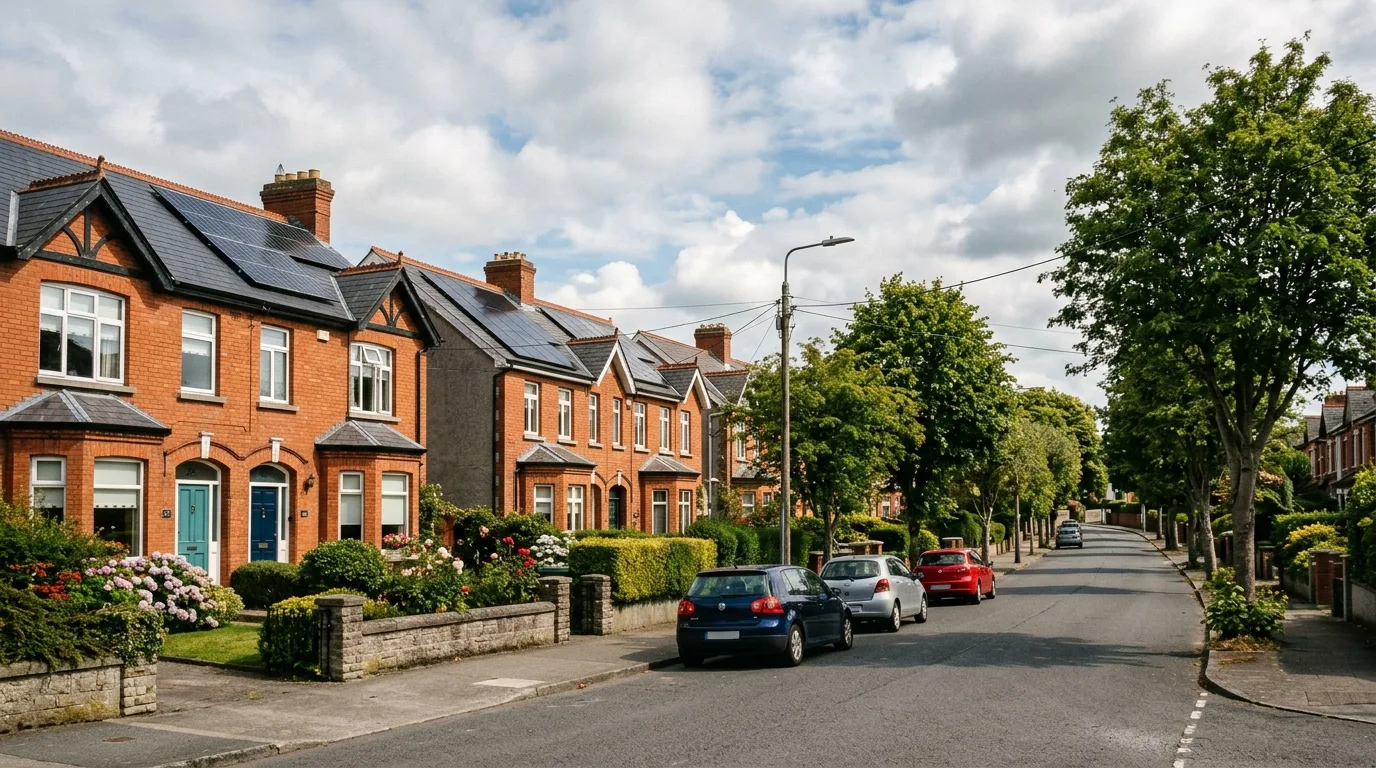
Planning permission for solar panels in Ireland is not required for most residential installations — and hasn't been since 2022 when the government significantly expanded the planning exemption for solar PV. But "exempt in most cases" is not the same as "exempt in all cases," and the conditions attached to the exemption matter.
This guide explains the current 2026 rules, the key conditions, the important exceptions, and what to do in cases where planning permission is required or uncertain.
The 2022 Planning Exemption: What Changed
Before 2022, solar panels fell under a general planning exemption but were subject to restrictions that caused confusion — particularly around total array area and protrusion limits. In 2022, the Planning and Development Regulations 2022 (SI 586 of 2022) introduced specific, clearer exemptions for solar PV on dwellings and associated structures.
The new regulations explicitly created a Class 5A exemption for solar panels on dwellings, replacing the previous generic permitted development rights that applied to solar. This exemption is now the primary basis for most Irish residential solar installations proceeding without planning permission.
What the Exemption Covers
Under Class 5A of the Planning and Development Regulations 2022, solar PV panels on a dwelling house are exempt from planning permission provided:
For Pitched Roofs:
- No protrusion above roof plane: Panels must not project more than 15 cm above the roof surface at any point. They must be flush with the roof line when viewed from the side.
- Ridge clearance: Panels must not project above the ridgeline of the dwelling.
- Panel area limits: The total solar panel area must not exceed certain limits (check current regulations — these were subject to review in 2024–2025).
- Associated structures: Pipes, wires, and ancillary equipment are also exempt if related to the solar installation.
For Flat Roofs and Roof Terraces:
- Panels must not be visible from a public road or thoroughfare adjacent to the front of the house (in some configurations)
- Structural clearance limits apply
For Free-Standing (Ground Mount) Structures:
- Maximum 12 m² of solar panels in the curtilage of a dwelling (garden)
- Not forward of the front wall
- Maximum height at highest point: 2 metres
What the Exemption Does NOT Cover
The planning exemption has important limitations:
Protected Structures
If your home is a Protected Structure (on the Record of Protected Structures maintained by your local authority), the general exemption does not apply. Any works that affect the character of a protected structure require planning permission — including solar panel installation. You must apply to your local authority.
In practice, this affects Georgian terraced houses in Dublin city centre, Victorian homes in conservation areas, and any building specifically listed on the RPS. If you're unsure, check with your local authority's planning department or the National Inventory of Architectural Heritage.
Architectural Conservation Areas (ACAs)
Homes within an Architectural Conservation Area may have additional restrictions, even if not themselves Protected Structures. Some ACAs explicitly restrict solar panels on street-facing elevations or require panels to be invisible from public roads. Check with your local authority if you live in an ACA.
Apartment Buildings and Multi-Unit Developments
The Class 5A exemption applies to dwelling houses — not apartment blocks. Apartment buildings require planning permission for solar installations (though the planning authority is generally supportive for appropriately designed rooftop installations).
Non-Residential Buildings
Commercial buildings, agricultural structures, and non-residential buildings use different exemption classes. Many commercial solar installations require a full planning application.
Do I Need Planning Permission? Quick Decision Guide
You are likely EXEMPT if:
- You live in a standard house (semi-detached, detached, bungalow, terraced)
- Your panels don't protrude more than 15 cm above the roof surface
- Your home is not on the Record of Protected Structures
- Your home is not in a designated Architectural Conservation Area that restricts solar
You may need planning permission if:
- Your home is a Protected Structure (check the RPS)
- Your home is in a designated ACA that restricts external alterations
- Your system is unusually large or positioned in a non-standard way
- You're installing ground-mounted panels larger than 12 m²
- The panels would be highly visible from a road or would protrude above the ridgeline
Check with your local authority if:
- You're unsure about your ACA status
- You've received conflicting advice from different sources
- Your property has any heritage designation
How to Check If Your Home Is a Protected Structure
- Go to your local council's website (e.g., dublincity.ie, corkcity.ie, galway.ie)
- Search the planning portal for your address
- Check whether your property appears on the Record of Protected Structures (RPS)
- Alternatively, ask your SEAI-registered installer — many routinely check this as part of their pre-installation process
What to Do If You Need Planning Permission
For Protected Structures
You must submit a planning application to your local authority for solar panel installation. Key tips:
- Submit a heritage impact assessment alongside your application — this demonstrates you've considered the visual and architectural impact
- Specify flush-mounted in-roof systems (BIPV or in-roof glass) rather than on-roof rails — these are generally viewed more sympathetically for heritage properties
- Rear-of-building only — applications for rear-elevation solar (invisible from public road) are almost always approved even on Protected Structures
- Contact your local authority's conservation officer before submitting — they can advise on acceptable approaches
For Architectural Conservation Areas
In an ACA, front-elevation solar panels may be restricted. Rear-slope solar is almost always acceptable. Contact the planning department for a pre-planning consultation (usually free) to understand what's acceptable before commissioning.
Planning Application Process
- Form: Planning Application Form from the local authority
- Fee: €34 for alterations/extensions to an existing dwelling (2026)
- Notice: Erect site notice on the property for 5 weeks
- Decision: Local authority has 8 weeks to decide (typically a positive decision for sensible solar proposals)
- Appeal: If refused, appeal to An Bord Pleanála within 4 weeks of decision
Practical Advice from the Field
Get it in writing from your installer: Your SEAI-registered installer should confirm in writing that the installation is exempt from planning permission based on the current regulations. If they won't provide this confirmation, ask why.
Don't assume the developer's permission covers you: If you live in a housing development, the planning permission granted to the developer does not automatically cover individual homeowners' subsequent alterations.
Estate management companies (OMCs): Planning permission exemption does not override OMC/management company rules. Always check your deeds and OMC rules before assuming you can install on any home in a managed estate.
Future rule changes: Planning regulations are subject to change. The 2022 regulations improved significantly on earlier rules, but future reviews may further clarify or adjust the exemption conditions. Always verify against current DECC/DHLGH guidance at time of installation.
Get 3 free solar quotes — free and no obligation.
Frequently asked questions
Do I need planning permission for solar panels in Ireland?
Most homes do not need planning permission, as solar panels on dwelling houses are covered by the Class 5A planning exemption introduced in 2022. The exemption requires that panels don't protrude more than 15 cm above the roof surface and don't project above the ridgeline. Protected structures and homes in Architectural Conservation Areas may require planning permission.
What is the Class 5A planning exemption for solar panels in Ireland?
Class 5A (introduced by SI 586 of 2022) specifically exempts solar PV panels on dwelling houses from planning permission, provided certain conditions are met — mainly that panels don't protrude more than 15 cm above the roof plane and don't project above the ridgeline. This replaced the previous general permitted development rights that covered solar.
Can I put solar panels on a protected structure in Ireland?
Not without planning permission. If your home is on the Record of Protected Structures (RPS), any solar installation requires a full planning application to your local authority. Applications for rear-facing panels (invisible from public road) are generally approved. Heritage impact assessments and consultation with the local conservation officer are recommended.
Do solar panels need planning permission in a conservation area in Ireland?
If your home is in an Architectural Conservation Area (ACA), you may face restrictions on solar panels visible from the street. Solar panels on rear slopes or roofs not visible from public roads are generally acceptable. Contact your local authority's planning department for a pre-planning consultation before commissioning a quote.
Can I install ground-mounted solar panels in my garden in Ireland without planning permission?
Yes, for free-standing structures in the curtilage of a dwelling up to 12 m² total solar panel area, not forward of the front wall, and with a maximum height of 2 metres at the highest point. Larger ground-mounted systems or those in front gardens require planning permission.
Sources & further reading
- Planning and Development Regulations 2022 — SI 586 — Government of Ireland / Irish Statute Book
- Department of Housing — Solar Panel Planning Exemptions — Department of Housing, Local Government and Heritage
- National Inventory of Architectural Heritage — Department of Housing, Local Government and Heritage